





Merit Financial Group LLC Reduces Stake in PayPal Holdings, Inc. $PYPL
A recent development in the financial sector has caught the attention of investors and market...

In a significant shift, 21Shares has walked back its earlier prediction that Bitcoin's four-year cycle had broken, projecting instead a year-end recovery to $100,000. This adjustment reflects a deeper understanding of the cryptocurrency market's complexities and nuances, emphasizing the need for expert analysis and forward-looking perspectives. Experts attribute this year's milder collapse, which saw Bitcoin drop roughly 50%, to its divergence from previous cycles, characterized by 80%+ crashes. This distinction highlights the rapidly evolving nature of the cryptocurrency market, where expectations and predictions must be continually reassessed.
The current market's response to price fluctuations is a testament to its increasing maturity and resilience. Despite the 50% drop, Bitcoin's price has not breached the $54,000 aggregate cost basis, a critical threshold historically associated with full capitulation in past downturns. This resilience is a powerful indication of the market's adaptability and its ability to absorb shocks, underscoring the importance of adopting a long-term perspective in cryptocurrency investments.
Several key indicators suggest that the market is shifting toward a more institutionalized and professionalized environment. For instance, wallet counts continue to rise, and ETF ownership is being increasingly held by institutions rather than individual investors. This transition signifies a growing recognition of the potential benefits of cryptocurrency investments among mainstream financial players, underscoring the need for more sophisticated and informed decision-making in the market.
One notable development is the significant accumulation of Bitcoin by institutions, with roughly 200 public companies now holding 1.28 million BTC combined, surpassing the 2025 goal of reaching this milestone. However, the collective value of this accumulated stash is lower than anticipated due to the drop in price. This gap has led to a wave of forced sales, as institutional holders attempt to rebalance their portfolios and recoup losses. The example of Nakamoto Holdings, which dumped Bitcoin at a loss of roughly 40%, highlights the difficulties and challenges faced by investors seeking to navigate this complex environment.
Furthermore, a recent report suggests that 13 out of 18 major treasury vehicles are now trading below the value of their own Bitcoin holdings, underscoring the urgency for these entities to accumulate and hold coins to cover their deficits. This imperative is driving many institutions to reassess their cryptocurrency strategies, with some opting for a more active and hands-on approach. For instance, Twenty One Capital, one of the few names still trading above its coin value, is pursuing a merger with Strike and Elektron Energy to strengthen its position in the market.
The impact of price fluctuations on the broader cryptocurrency market is worth analyzing. The global crypto ETP assets, which stood at $172 billion at the end of 2025, dropped to approximately $140 billion by May, marking a 15% year-to-date decline. However, this decline is solely a result of price weakness, rather than investors pulling out in droves. The relative resilience of the market, despite this decline, is a testament to the continued confidence and support of cryptocurrency investors.
A critical factor to consider in the cryptocurrency market is the role of institutional players and their investment decisions. Despite the overall market decline, several notable institutions have chosen to hold onto their Bitcoin positions. For instance, the US spot Bitcoin ETFs, despite experiencing net outflows of $3 billion, still hold 1.25 million coins, just 8% off their all-time peak. This data suggests that investors are choosing to ride out the market volatility, rather than exiting their positions entirely.
The current market dynamics can be attributed to a fundamental issue with the cryptocurrency market's pricing mechanisms. Every prediction that fell short in this report can be traced back to the same root cause: Bitcoin's price came in below expectations, which in turn dragged down every dollar-denominated metric in the scorecard. This highlights the need for a more nuanced understanding of the cryptocurrency market, where price fluctuations can have far-reaching and unpredictable consequences.
Bitcoin's 4-Year Cycle Pattern Intact, With a Maturing Market and Increasing Adoption, Experts Say Benzinga
A recent development in the financial sector has caught the attention of investors and market...
Selena Gomez's mental health platform Wondermind has raised $1.2 million from investors, but some...
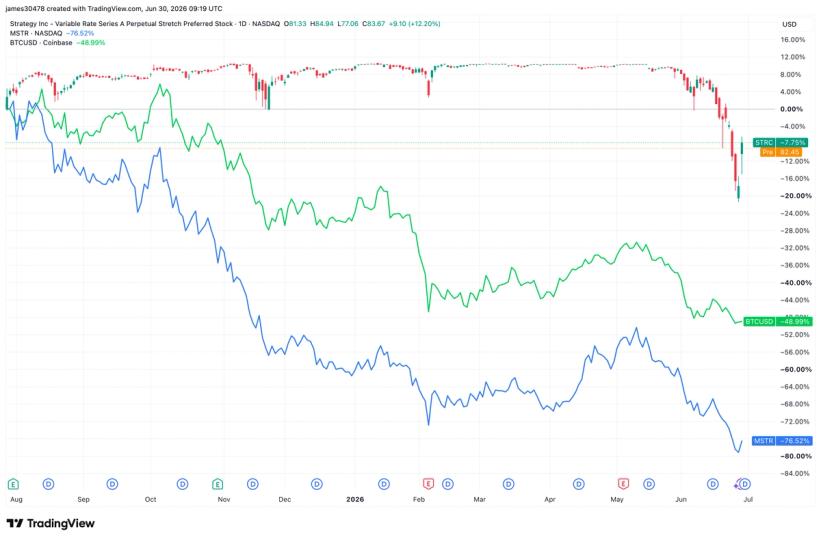
MSTR Stock is set to end the month with its worst performance since 2022, largely due to the...

Strategy stock MSTR experiences a notable increase due to a recently announced plan to divest from...
Will Michael Saylor's strategy drop another BTC buy?
A leading digital asset analytics firm, CryptoQuant, advises a strategic pivot to safeguard...

Netizen tidak senang dengan komentar-komentar yang diberikan

BTS mungkin kembali mengikuti Grammy setelah rekanan mereka, Recording Academy, mengumumkan revisi...
BTS mungkin tidak akan mengubah keputusan untuk mengabaikan Grammy karena deadline pengiriman musik...
Update terbaru tentang keputusan BTS untuk tidak mengirimkan musik mereka untuk dijadikan nominee...
Pihak Recording Academy mengumumkan akan kembali meninju keputusan untuk memperkenalkan kategori...

Sangyeop Sangyeop mengumumkan rencananya untuk menikah dengan seorang non-celebrity, mengejutkan...