

Unsung Heroes: 10 Renowned Individuals Who Attended Woodstock in 1969 but Didn't Take the Stage
Dive into the fascinating world of Woodstock, the iconic music festival of the 1960s, and discover...
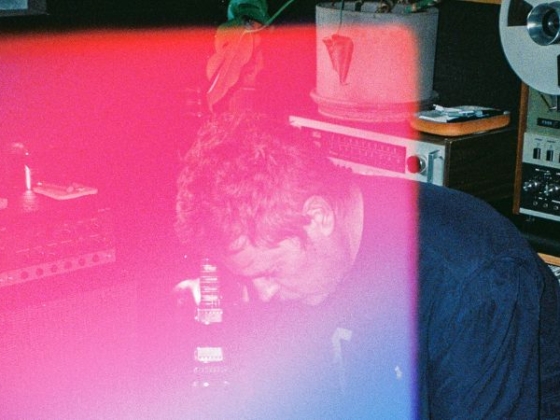
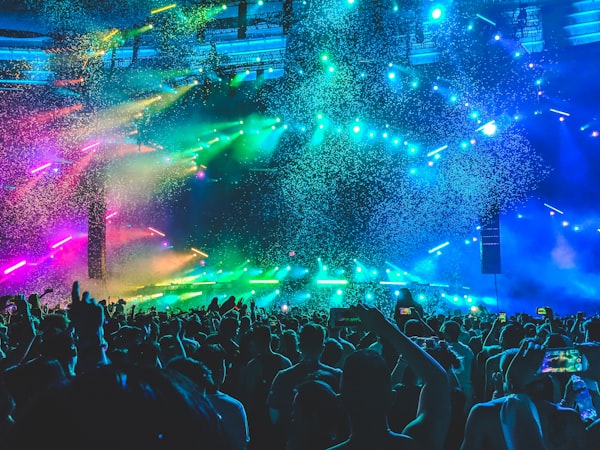
The purple hit Basing House around eleven. Not stage-light purple, but haze purple, the kind that settles in your clothes. Up front, a kid in a North Face puffer was leaning against the barrier, phone out, waiting. He didn't look like he was there for a "Chinese cultural event." He looked like he was at any other East London show, killing time before the drop. Then the MC stepped up and opened in Mandarin, and the room tilted. Not away, but toward. That tilt is Siyi Lyu's work.
There is a difference between bringing an artist to a country and embedding them in its culture. Lyu knows it. When she staged PURPLE SOUL at Basing House this February, part of a three-city run through London, Manchester, and Birmingham, she wasn't filling a diaspora slot. She was attempting to graft Chinese local rap directly into the UK's live music bloodstream. The venue choice said everything: Basing House carries no built-in Chinese-speaking audience. Its identity is rooted in East London's street-level music culture, the same ecosystem that birthed grime and UK rap. By refusing a safer, Chinatown-adjacent room, Lyu forced the music to survive on sonic merit rather than cultural curiosity.
On the night, PURPLE SOUL justified the venue. The set ran just under an hour, live-band configuration, the MC working the stage with a physicality that translated where the lyrics couldn't. He crouched over the monitor on verses, opened up on the hooks, let the instrumental breathe between bars. There was no attempt to anglicize the delivery or explain the references. That refusal was itself the statement.
The crowd response unfolded in waves. Early tracks drew phone-out curiosity. By the fourth, the barrier section had shifted from recording to moving, head-nods becoming full-body engagement. The late set saw pockets of the room operating on pure adolescent energy, the kind that has nothing to do with cultural representation and everything to do with a beat hitting at the right volume. The language barrier was real but uneven: melodic hooks landed universally; the denser verses passed through like a conversation the room could sense but not enter. That opacity was oddly compelling, more honest than a show engineered for maximum comprehension.
What mattered most was the absence of cultural deference. Nobody watched out of anthropological interest. The room paid the same currency it would pay any London club booking: approval measured in movement, not applause. That is harder to manufacture than a standing ovation, and a better signal of genuine integration.
The visual identity was doing equally heavy lifting to make that integration legible. Lyu's visual system showed sophisticated semiotic awareness: the Chinese dragon is a symbol burdened with centuries of exoticized Western shorthand; in lesser hands, it becomes a touristic prop. She avoided this by tethering the motif directly to the group's name, and wrapping it in a purple palette evoking healing and resilience rather than imperial heritage. Recontextualized through UK underground aesthetics and London Underground signage, the dragon became a bridge between urban identities rather than a billboard for cultural difference. It was one of the more elegant examples of visual translation in recent cross-cultural live production.
Yet the project's tensions are as instructive as its triumphs. Hip-hop is fundamentally a lyric-driven narrative form, and the Mandarin language barrier at Basing House created an unavoidable structural gap. The connection audiences made was largely atmospheric and musical, rooted in production, energy, and physical presence, rather than narrative. For some listeners, that abstraction was liberating; for others, it was a loss. Lyu has acknowledged this tension but has not yet fully resolved it. Similarly, while the dragon motif worked here because the group's name already contained the character, its scalability is questionable. For Chinese artists without such convenient semiotic anchors, the visual vocabulary she has developed may not translate as cleanly.
What makes Lyu's practice genuinely interesting is that she is building something structural, not decorative. PURPLE SOUL was not a standalone spectacle but a continuation of a curatorial trajectory that includes the BRAZY China Tour and the DJ YIDA & DJ EJ Asia Tour, projects that treat live music as a platform for dialogue rather than export. In an era where "diversity" in UK live music often means parallel programming rather than integrated ecosystems, Lyu is asking a harder question: what happens when you stop framing international artists as guests and start treating them as participants?
In an exclusive interview, Lyu breaks down the curatorial decisions, the risks of cross-cultural live production, and what comes next. "I guess... a connector? More than anything. Someone who brings things over, but not just drops them. You can't import a scene and plonk it on a stage. Doesn't work. You've got to translate it. Not the language, the *values*. The creative identity. Make it so a local audience can actually feel it, not just watch it. That's the job. Building real connections between different music cultures. Creating space for something genuine to happen."
PURPLE SOUL was a deliberate choice, selected for their ability to cross over and start conversations between different communities. The tour wasn't just a gig; it was a way of bringing a piece of history over and letting it meet new people. Chinese audiences, international students, local UK kids - all in the same space. This diverse audience mix was very intentional, achieved through venue choices that were part of local music communities, not ethnic community centers, and marketing that was bilingual but not segregated.
Lyu navigates the tension between representing Chinese music and letting it exist as simply music within the UK ecosystem by focusing on context, not narrative. She doesn't force a cultural story on people; she sets the right room, the right atmosphere, paying attention to shared values, musical innovation, and what the audience actually feels. Nationality is there, but it's not the headline. Once someone connects with the sound, the rest follows naturally - the language, the stories, the background. It becomes part of a deeper conversation.
Critics often argue that diaspora music tours in the UK fall into two traps: preaching to the converted or diluting the music for Western palates. PURPLE SOUL attempted to escape both by selecting an artist who is both authentic and accessible without compromise. The tour's visual identity merged the Chinese dragon with UK street aesthetics and London Underground signage, preventing it from becoming exoticized or reduced to a cliché by making it organic, part of the group's identity, and rooted in a modern city context.
Lyu's work is part of a broader trajectory that includes connecting music cultures between China and the UK. The BRAZY China Tour brought UK Afro-influenced music to Chinese audiences, while PURPLE SOUL brought Chinese hip-hop to the UK. DJ YIDA & DJ EJ Asia Tour looked at how music moves across borders while staying connected to local contexts. Each project treats live music as a platform for dialogue, aiming to build long-term, sustainable connections between music communities.
As Lyu looks to the future, she hopes that her efforts will be seen not just as events, but as part of a larger framework for cultural exchange and understanding. "I don't see myself as someone who puts on events. I'm trying to build long-term connections between music communities. Sustainable ones. PURPLE SOUL is one chapter in that. A step toward something bigger." This approach, focusing on the music as the entry point and letting the cultural context follow naturally, has the potential to redefine how we think about music scenes and cultural integration.
The purple haze that settled over Basing House was more than just a fleeting moment, it was a cultural phenomenon waiting to happen. As the Mandarin-speaking MC took the stage, the room tilted, not away, but towards the infectious energy of Chinese local rap. This was Siyi Lyu's doing, a curator with a vision to graft Chinese music directly into the UK's live music bloodstream.
Dive into the fascinating world of Woodstock, the iconic music festival of the 1960s, and discover...
Get the latest updates on Tesehki vs. Big Lex results and highlights from the highly anticipated...

DocturDot membuka babak baru dengan "1x4DaWonton," single yang berwarna-warni dan menampilkan Taylr...

Musisi K-Riz dari Calgary kembali ke tengah perhatian dengan single "Set U Free", yang...

Emily Ryan menghadirkan lagu baru yang sangat cocok untuk musim panas, 'Discreet', dengan...
Emily Ryan kembali menyapa penggemar dengan single terbarunya, "Discreet", yang dipadukan dengan...
Netizen tidak senang dengan komentar-komentar yang diberikan
BTS mungkin kembali mengikuti Grammy setelah rekanan mereka, Recording Academy, mengumumkan revisi...
BTS mungkin tidak akan mengubah keputusan untuk mengabaikan Grammy karena deadline pengiriman musik...
Update terbaru tentang keputusan BTS untuk tidak mengirimkan musik mereka untuk dijadikan nominee...
Pihak Recording Academy mengumumkan akan kembali meninju keputusan untuk memperkenalkan kategori...

Sangyeop Sangyeop mengumumkan rencananya untuk menikah dengan seorang non-celebrity, mengejutkan...