



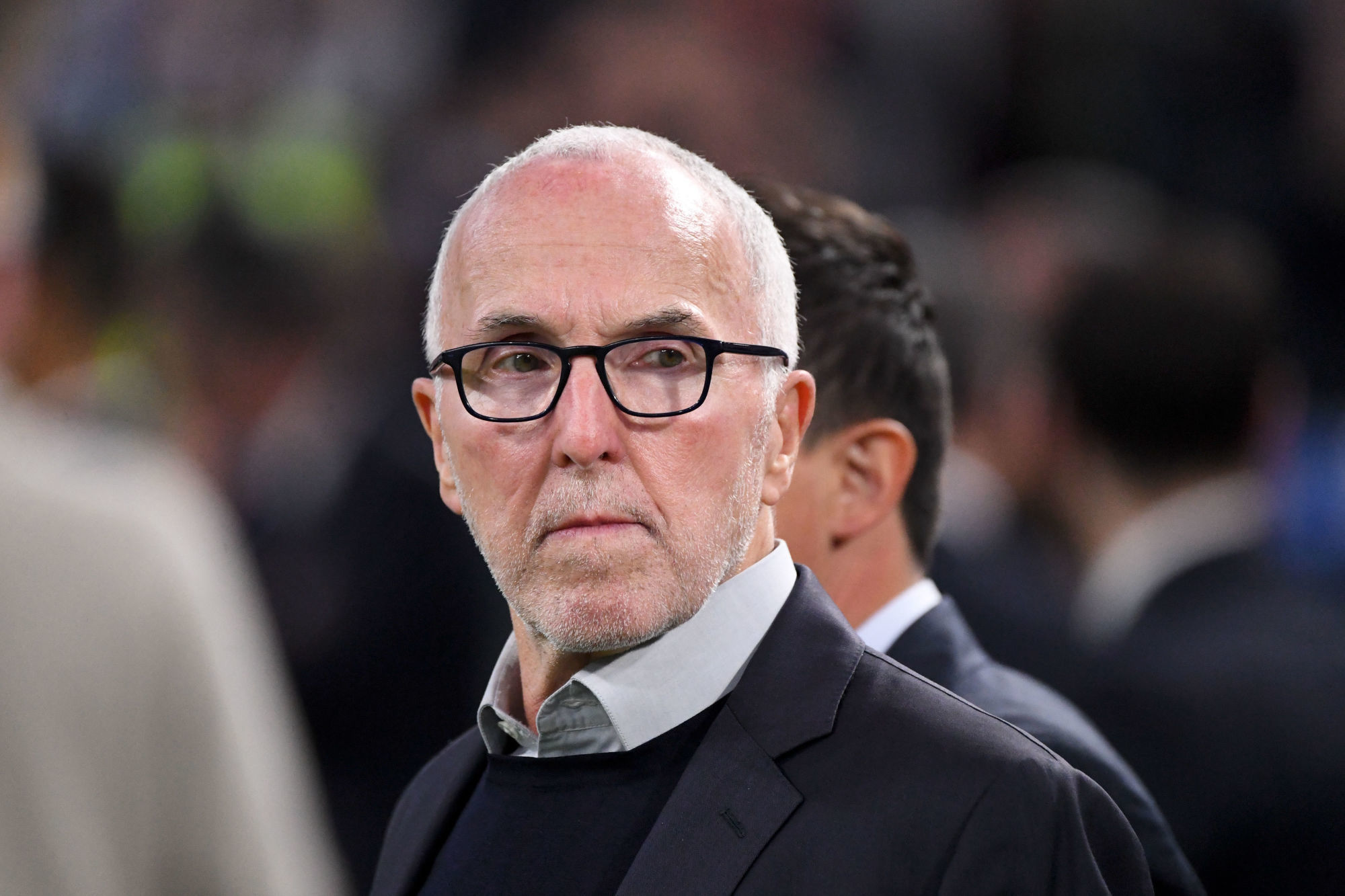
Marseille's Owner, Frank McCourt, Injects €50.2 Million into the Football Club
Marseille's Owner Injects €50.2 Million into the Football Club: A Strategic Move to Secure the...

The Federal Reserve's decision to keep interest rates steady, as announced by Chairman Kevin Warsh in his first meeting, has been met with a mixture of anticipation and skepticism. Despite the rates remaining unchanged, the Fed has signaled that future hikes are more likely, primarily due to elevated inflation. This move has sparked a wave of reactions from financial experts and analysts, each providing their own insights into what this means for the future of the economy.
One of the most significant takeaways from Warsh's meeting is the emphasis on price stability. The Fed's commitment to achieving its mandate for price stability has been reaffirmed, with Warsh underscoring the importance of this goal. According to Rick Rieder, head of fixed income at BlackRock, 'Today we believe that the Federal Reserve's FOMC ushered in a new era of monetary policy in the United States.' This statement reflects the sentiment that Warsh's leadership may indeed mark the beginning of a new chapter in U.S. monetary policy.
Warsh's hawkish tone has also been a subject of discussion. Krishna Guha, head of central bank strategy and economics at Evercore ISI, noted that 'New Fed Chair Warsh sounded a bit like old hawkish Fed governor Warsh at his press conference today, repeating multiple times the need for the Fed to deliver on its mandate for price stability.' This hawkish stance suggests that the Fed under Warsh's leadership may adopt a more stringent approach to managing inflation, potentially leading to higher interest rates in the future.
Jason Pride, chief of investment strategy at Glenmede, offered another perspective, stating, 'The [task force] announcements signal an institution in active review rather than steady state, and investors should expect the operating framework of the Fed to look meaningfully different over Warsh's tenure than it did under his predecessor.' This observation highlights the potential for significant changes within the Fed's operational framework, which could have far-reaching implications for monetary policy and the economy as a whole.
Dario Perkins, managing director of global macro at TS Lombard, provided a forward-looking analysis, suggesting, 'Warsh wants his first impression to be as 'the reformer.' We'll see what that means later this year. In terms of the policy outlook, Fed watching just got harder.' This commentary underscores the uncertainty surrounding the future actions of the Fed under Warsh's leadership and the potential challenges in predicting policy decisions.
As the financial community continues to dissect the implications of the Fed's decisions, one thing is clear: the era of Kevin Warsh as Fed Chairman has begun with a commitment to price stability and a signal towards potentially higher interest rates. The reactions from CEOs, financial analysts, and policymakers will be closely monitored in the coming months as the economy navigates these changes. With the global economic landscape evolving rapidly, the decisions made by the Fed will play a crucial role in shaping the future of monetary policy and economic growth.
The path forward for the U.S. economy, under the guidance of the Federal Reserve with Kevin Warsh at the helm, is fraught with both challenges and opportunities. As inflation continues to be a pressing concern, the balance between controlling prices and supporting economic growth will be a delicate one to maintain. The commitment to price stability, coupled with the potential for future rate hikes, sets the stage for a complex and potentially transformative period in U.S. economic history.
In conclusion, the five big takeaways from Kevin Warsh's first meeting as Fed Chairman provide a glimpse into the future of U.S. monetary policy. With a renewed focus on price stability, a hawkish tone, and the potential for significant changes within the Fed's operational framework, the coming months will be pivotal in understanding the full implications of these decisions. As the financial world watches with keen interest, the actions of the Fed under Warsh's leadership will undoubtedly have a profound impact on the trajectory of the U.S. economy.
The Federal Reserve, under the leadership of Chairman Kevin Warsh, has made significant decisions regarding interest rates, signaling a potential shift in monetary policy. This article delves into the five major takeaways from Warsh's first meeting, exploring the implications of these decisions on the economy and providing insights from financial experts.
Marseille's Owner Injects €50.2 Million into the Football Club: A Strategic Move to Secure the...

Rebel Creamery LLC, a major ice cream brand, has filed for Chapter 11 bankruptcy following a...
Major ice cream brand seeks Chapter 11 bankruptcy after lawsuit

Cristiano Ronaldo and Georgina Rodriguez's Divorce Plan Revealed Sports.Fr
Kalshi Promo Code TSNEWS: Get $25 Prediction Bonus for UFC 330 Fights sports.yahoo.com

Major ice cream manufacturer Rebel Creamery LLC, a popular brand sold in stores like Walmart and...

Netizen tidak senang dengan komentar-komentar yang diberikan

BTS mungkin kembali mengikuti Grammy setelah rekanan mereka, Recording Academy, mengumumkan revisi...
BTS mungkin tidak akan mengubah keputusan untuk mengabaikan Grammy karena deadline pengiriman musik...
Update terbaru tentang keputusan BTS untuk tidak mengirimkan musik mereka untuk dijadikan nominee...
Pihak Recording Academy mengumumkan akan kembali meninju keputusan untuk memperkenalkan kategori...

Sangyeop Sangyeop mengumumkan rencananya untuk menikah dengan seorang non-celebrity, mengejutkan...