





Pemerintah Kabupaten Aceh Tamiang: Bumi Muda Sedia Pulih dan Bangkit
Pemerintah Kabupaten Aceh Tamiang: Bumi Muda Sedia Pulih dan Bangkit — Informasi Terbaru
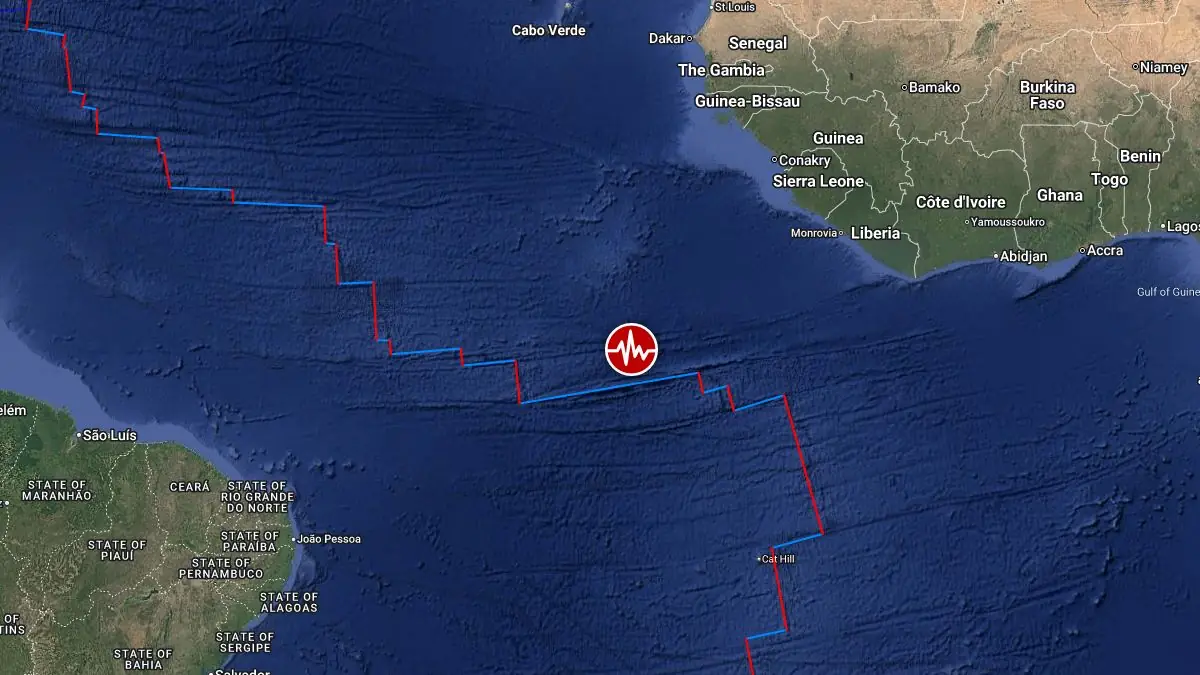
The Mid-Atlantic Ridge, a vast underwater mountain range, is a site of intense seismic activity due to the movement of the North American, South American, and African tectonic plates. The area experiences frequent earthquakes, often resulting from the constant divergence of these plates.
The recent M6.6 earthquake in the central Mid-Atlantic Ridge occurred at 18:56 UTC on June 17, 2026. The epicenter was located 1 031 km (640 miles) NW of Georgetown, Ascension, and 1 222 km (760 miles) SW of Bonthe, Sierra Leone. According to the USGS, the earthquake had a shallow depth of 10 km (6.2 miles). EMSC also confirmed the same magnitude and depth.
No tsunami threat has been reported from this earthquake, but the impact on the surrounding marine and coastal ecosystems is yet to be determined. The region's high seismicity poses a constant threat to nearby islands and coastlines, making monitoring and research crucial for the residents and wildlife.
The seismic event highlights the significance of geological monitoring. The study of earthquakes is fundamental in understanding plate tectonics, oceanic and continental processes, and geohazards. The Mid-Atlantic Ridge serves as an exemplary location to study rifting processes, mantle dynamics, and seafloor spreading.
Scientists at the University of Southampton have been conducting research on this seismic event. Their work focuses on understanding the seismic processes and the geological setting that led to the occurrence of the M6.6 earthquake. The research has been ongoing and is providing valuable insights into the mechanisms that drive this unique geological system.
Dr. Maria Rodriguez, a geologist at the USGS, commented on the implications of the earthquake: "The earthquake is a reminder of the ongoing geological processes that have shaped our planet. The movement of these plates and the resulting earthquakes highlight the dynamic nature of our Earth.
The region's geology has captured scientists' attention for decades due to the unique combination of plate tectonics and oceanic processes at play. The M6.6 earthquake serves as a poignant example of the ongoing seismic activity in the Mid-Atlantic Ridge. As research continues, our understanding of the Earth's processes will deepen, revealing new perspectives on our planet's dynamics.
The M6.6 earthquake is expected to generate new waves of research in plate tectonics, seismology, and geophysics. This is an opportunity for scientists, researchers, and students to engage in a deeper understanding of the processes driving the Mid-Atlantic Ridge. Through continued scientific investigation, we can unlock the secrets of the Earth's internal dynamics.
While there is still much to be discovered, the seismic event serves as a reminder of the vast and complex systems that govern our planet. The ongoing research and scientific inquiry provide a better understanding of the Earth's processes and inform strategies for mitigating hazards and understanding the ever-changing environment.
A shallow M6.6 earthquake hits the central Mid-Atlantic Ridge, sparking widespread interest in the scientific community. The Watchers analyzes the seismic event, its effects, and the implications for the region.
Pemerintah Kabupaten Aceh Tamiang: Bumi Muda Sedia Pulih dan Bangkit — Informasi Terbaru

Acara 600 ribu porsi kulinier gratis di Monas, menghidupkan semangat kebangsaan dan memperkuat rasa...

Hayden Panettiere, bintang televisi Amerika yang terkenal dengan perannya dalam serial 'Heroes' dan...

Jalan Merdeka Barat Dekat Istana Merdeka Jadi Parkir Liar Warga yang ke Monumen Nasional IDN Times

Kopassus Mengudara: Aksi Terjun Payung Terunggul di Istana Merdeka - Media Indonesia

Watch the live action of Tijuana vs. Cruz Azul, all the latest news, analysis, and match scores...

Netizen tidak senang dengan komentar-komentar yang diberikan

BTS mungkin kembali mengikuti Grammy setelah rekanan mereka, Recording Academy, mengumumkan revisi...
BTS mungkin tidak akan mengubah keputusan untuk mengabaikan Grammy karena deadline pengiriman musik...
Update terbaru tentang keputusan BTS untuk tidak mengirimkan musik mereka untuk dijadikan nominee...
Pihak Recording Academy mengumumkan akan kembali meninju keputusan untuk memperkenalkan kategori...

Sangyeop Sangyeop mengumumkan rencananya untuk menikah dengan seorang non-celebrity, mengejutkan...