




US-South Korea Military Drills Scaled Back After Trump's Inauguration
The 2017 US-South Korea military drills were scaled back following a meeting between US President...
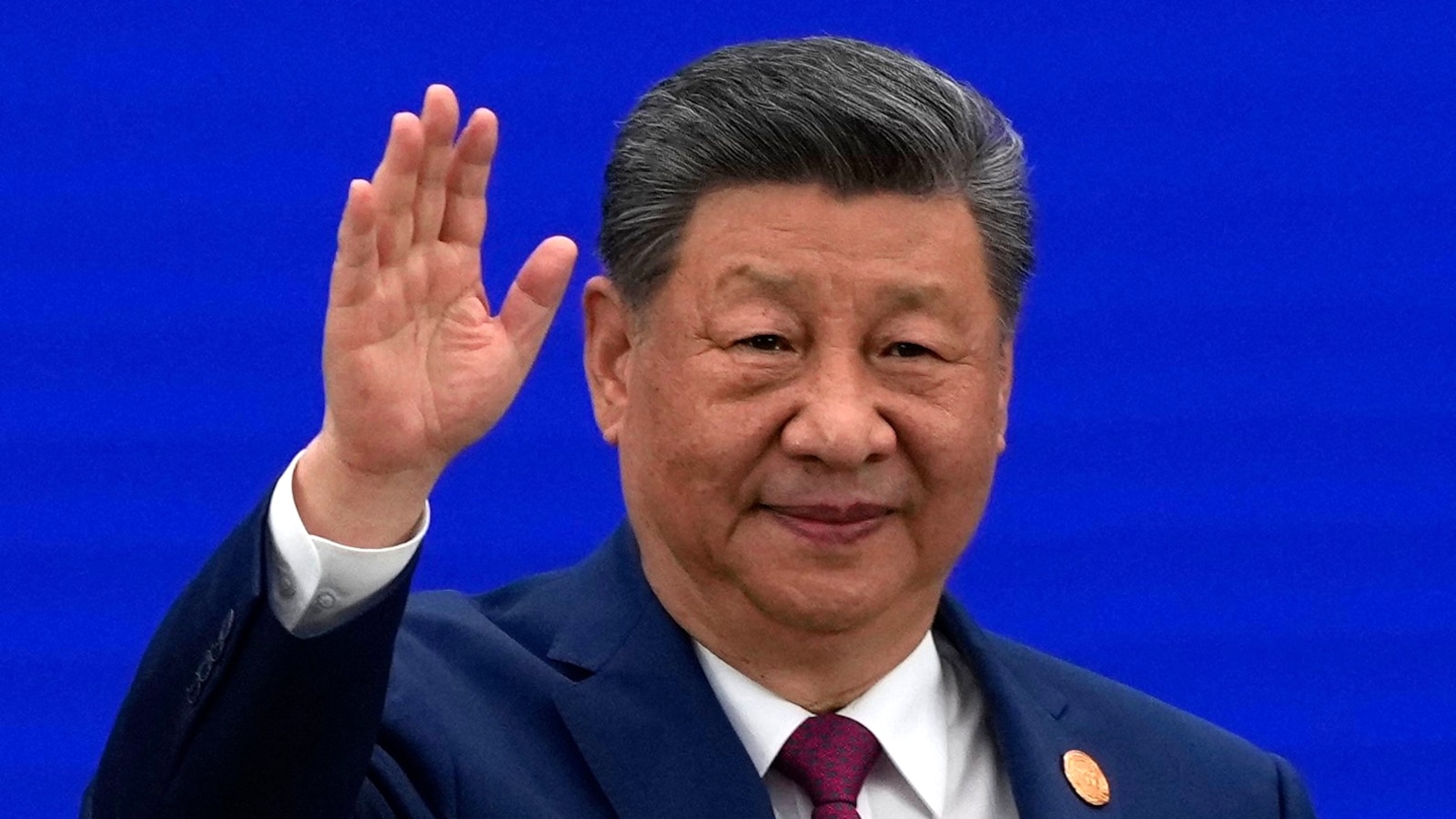
Chinese President Xi Jinping recently spoke at the World Artificial Intelligence Conference in Shanghai, where he emphasized the need for global cooperation in the development and governance of artificial intelligence. He stressed that AI should not be dominated by any single nation and that all countries should work together to promote its development and application. Xi also reiterated China's objections to the overstretching of national security concerns, which he believes can hinder international cooperation in the field of AI. Furthermore, he noted that China will provide 5,000 training opportunities on artificial intelligence to developing countries over the next five years. This move is seen as an attempt to strengthen China's position in the global AI landscape and to promote its own technological capabilities. Additionally, China will expand AI cooperation with various international organizations, including the Association of Southeast Asian Nations and the African Union.
The development of artificial intelligence has become a highly competitive field, with countries around the world investing heavily in research and development. The United States, in particular, has been at the forefront of AI development, with many of its tech giants, such as Google and Facebook, leading the charge. However, China has been rapidly catching up, with its own tech companies, such as Huawei and Baidu, making significant strides in the field. The US has imposed restrictions on China's access to advanced technologies, citing national security concerns, which has led to a tech race between the two countries. Xi's call for global cooperation in AI development can be seen as an attempt to counter the US's dominance in the field and to promote a more collaborative approach to AI development. This approach could have significant implications for the future of AI, as it could lead to more shared knowledge and resources, and potentially accelerate the development of AI technologies.
Xi's speech at the World Artificial Intelligence Conference was attended by leaders from various countries, including Kazakhstan, Cambodia, and Thailand, as well as U.N. Secretary-General António Guterres. The conference itself was a significant event, with over 1,100 companies and 1,400 guests participating. The event provided a platform for countries and companies to showcase their AI capabilities and to discuss the future of AI development. During the conference, tech giant Huawei showcased its powerful AI computing system, the Atlas 950 SuperPoD, which is seen as a significant breakthrough in the field of AI. The conference also saw the signing of an agreement between 29 countries, including Pakistan, Russia, and Kazakhstan, to establish a World Artificial Intelligence Cooperation Organization, which will be headquartered in Shanghai.
The establishment of the World Artificial Intelligence Cooperation Organization is seen as a significant step towards promoting global cooperation in AI development. The organization will provide a platform for countries to share knowledge and resources, and to work together to promote the development and application of AI technologies. China's role in the organization will be significant, as it will provide access to its AI technologies and expertise to member countries. This move is seen as an attempt by China to promote its own AI capabilities and to strengthen its position in the global AI landscape. The organization will also provide a platform for countries to discuss the ethical implications of AI development and to work together to establish common standards and regulations.
The implications of Xi's call for global cooperation in AI development are significant. If successful, it could lead to a more collaborative approach to AI development, with countries working together to promote the development and application of AI technologies. This could accelerate the development of AI and lead to significant breakthroughs in the field. However, it could also lead to increased competition between countries, as they seek to promote their own AI capabilities and to gain an advantage over their rivals. The US, in particular, may be concerned about China's growing influence in the field of AI and may seek to counter its efforts to promote global cooperation. The future of AI development will likely be shaped by the interactions between these two countries, as well as other significant players in the field.
In conclusion, Xi's call for global cooperation in AI development is a significant move that could have far-reaching implications for the future of AI. While there are challenges to be overcome, the potential benefits of a more collaborative approach to AI development are significant. As the world becomes increasingly interconnected, the need for global cooperation in fields such as AI will only continue to grow. China's role in promoting global cooperation in AI development will be significant, and its efforts to establish the World Artificial Intelligence Cooperation Organization are a significant step in this direction. The future of AI will be shaped by the interactions between countries and companies, and it is likely that we will see significant breakthroughs in the field in the years to come.
As the world moves forward in the development and application of AI technologies, it is essential to consider the ethical implications of these developments. The use of AI raises significant questions about privacy, security, and accountability, and it is essential that countries and companies work together to establish common standards and regulations. The World Artificial Intelligence Cooperation Organization will provide a platform for countries to discuss these issues and to work together to promote the responsible development and application of AI technologies. The future of AI will be shaped by the decisions we make today, and it is essential that we work together to ensure that AI is developed and applied in a way that benefits all of humanity.
China's five-year plan until 2030 has prioritized progress in frontiers of science and technology, including AI. The country has made significant strides in the field, with its own tech companies making significant breakthroughs. China's open-source AI models, such as DeepSeek, have been seen as appealing and often more affordable alternatives to US AI models, which are largely closed-source. This has made China an attractive partner for countries looking to develop their own AI capabilities. The country's efforts to promote global cooperation in AI development are likely to continue, and it is essential that other countries engage with China to promote the responsible development and application of AI technologies.
Chinese President Xi Jinping emphasized the need for international cooperation in the development and governance of artificial intelligence, citing the importance of collective effort and mutual benefit
The 2017 US-South Korea military drills were scaled back following a meeting between US President...

The decision to reduce US joint military exercises in South Korea has significant implications for...

Learn how to check if your car has been searched by Flock cameras and understand the implications...
Tommy John, the four-time MLB All-Star and namesake of the Tommy John surgery, has left a lasting...
The United States is reportedly considering imposing new sanctions on a Brazilian judge, according...
A dramatic encounter at Busan Airport marked a pivotal moment in the waning support for Donald...

Netizen tidak senang dengan komentar-komentar yang diberikan

BTS mungkin kembali mengikuti Grammy setelah rekanan mereka, Recording Academy, mengumumkan revisi...
BTS mungkin tidak akan mengubah keputusan untuk mengabaikan Grammy karena deadline pengiriman musik...
Update terbaru tentang keputusan BTS untuk tidak mengirimkan musik mereka untuk dijadikan nominee...
Pihak Recording Academy mengumumkan akan kembali meninju keputusan untuk memperkenalkan kategori...

Sangyeop Sangyeop mengumumkan rencananya untuk menikah dengan seorang non-celebrity, mengejutkan...