



Tereza Valentova Outlasts Elina Svitolina in an Uplifting Thriller at Cincinnati
Elina Svitolina vs Tereza Valentova · Round 2 · Cincinnati Tennis.com - A nail-biting encounter...

Lawmakers are questioning whether an antitrust carveout for broadcasting sporting events still applies in today's world of streaming media.
The House Judiciary Committee recently took testimony about the Sports Broadcasting Act of 1961, which granted professional sports leagues a carveout from antitrust laws when it came to broadcasting rights.
The law passed when home televisions were just starting to become a staple in American households, allowing the leagues to negotiate broadcasting deals and divvy up the profits.
This gave an advantage to teams in smaller media markets, said Matthew Mitten, executive director of the National Sports Law Institute at Marquette University Law School.
The law 'has definitely benefited the Packers, because they're in the league's smallest market,' Mitten said. 'Their share is much higher than if the Packers were individually selling their broadcast rights, trademark licensing rights, et cetera.'
Now, Congress is debating whether the 65-year-old antitrust exemption for sports leagues still applies, given that many broadcasting deals are now with paywalled services like Amazon Prime or Peacock.
U.S. Rep. Scott Fitzgerald, R-Juneau, chairs the House Judiciary Committee's antitrust subcommittee, which began an investigation into leagues' pricing models. At a hearing, Fitzgerald argued that these broadcasting deals are worth far more today and that fans may be losing out.
'Years later... it is fair for this body to ask whether the professional sports leagues have kept up their end of the bargain. In my opinion, they have not, and sports fans are paying the price because of it,' Fitzgerald said. 'While the leagues are undoubtedly more popular than they were in 1961, because they do not follow America's antitrust laws for television agreements, they can charge consumers inflated prices that would otherwise be illegal.'
The NFL is the most-watched league, drawing 10 to 20 times more viewers than the MLB or NBA. Some football fans pay as much as $600 per season to keep up.
Representatives for the Packers have said the current revenue-sharing model keeps their team alive. In a letter, Packers public affairs director Aaron Popkey said any disruption to the current model 'would pose an existential threat to the Green Bay Packers and their existence in Green Bay as we know it.'
Some members of Congress argued that the law has been a success, providing local markets with free access to home games. The law 'means that fans in Green Bay, Buffalo, and Kansas City can watch their teams compete on an equal playing field with those in Chicago, New York, and Los Angeles.'
A TV appearance over the weekend, Fitzgerald downplayed concerns about the law's impact on the Packers.
'When it comes to the NFL, shared revenue is not an issue, and as a matter of fact, I don't care how the NFL divides up the pie amongst the teams in the NFL,' he said. 'It's not something that's even affected by the SBA.'
In the meantime, Congressional dysfunction may be a more significant reason the law might not change anytime soon.
US lawmakers debate the relevance of a 1960s law that's helped the Green Bay Packers thrive for decades
Elina Svitolina vs Tereza Valentova · Round 2 · Cincinnati Tennis.com - A nail-biting encounter...
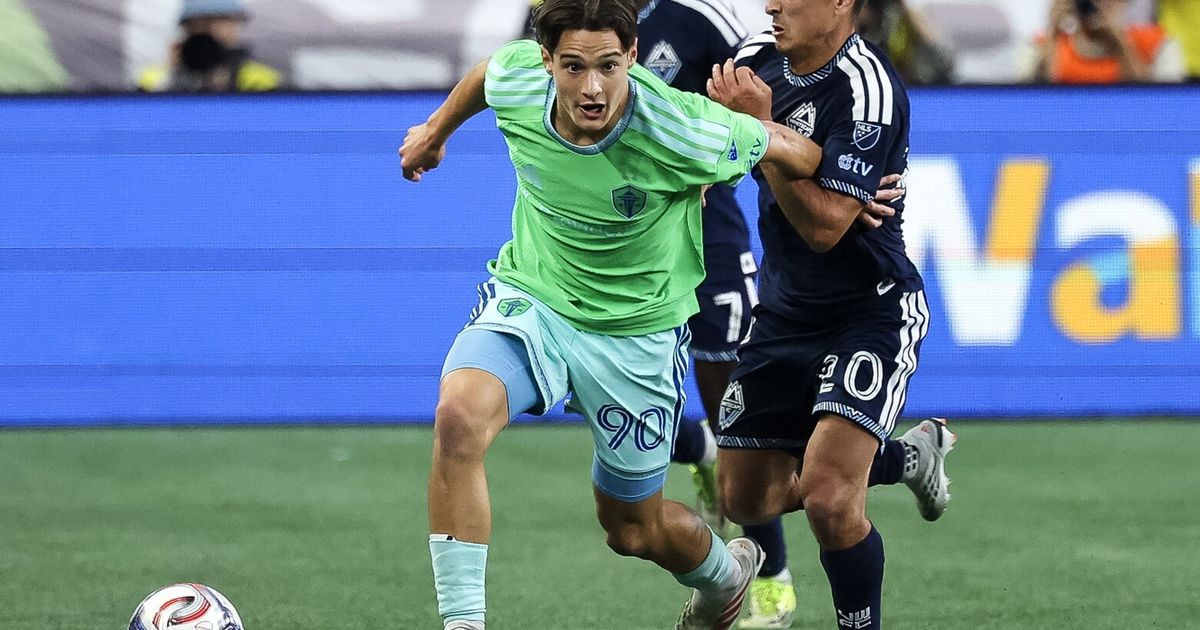
The Seattle Sounders take on the Vancouver Whitecaps in an electrifying match, with the two teams...

Ally Sentnor's 1st Angel City FC goal salvages draw with Washington ocregister.com

Watch the live action of Tijuana vs. Cruz Azul, all the latest news, analysis, and match scores...

The highly anticipated match between Lorenzo Sonego and Frances Tiafoe is set to take place in the...
.jpg?w=1120&h=630)
Dallas Cowboys' Next Move: Exploring Adoree' Jackson's Potential Signing After Von Miller's...

Netizen tidak senang dengan komentar-komentar yang diberikan

BTS mungkin kembali mengikuti Grammy setelah rekanan mereka, Recording Academy, mengumumkan revisi...
BTS mungkin tidak akan mengubah keputusan untuk mengabaikan Grammy karena deadline pengiriman musik...
Update terbaru tentang keputusan BTS untuk tidak mengirimkan musik mereka untuk dijadikan nominee...
Pihak Recording Academy mengumumkan akan kembali meninju keputusan untuk memperkenalkan kategori...

Sangyeop Sangyeop mengumumkan rencananya untuk menikah dengan seorang non-celebrity, mengejutkan...