
/data/photo/2026/05/29/6a19373c75296.png)

Donald Trump's Decision to Scale Back Joint Exercises with South Korea: Understanding the Context and Implications
President Donald Trump Orders Pentagon to Scale Back Joint Exercises with South Korea as Part of...

A federal appeals court in Washington, DC, on Tuesday rejected President Donald Trump adviser Peter Navarro's attempt to overturn his contempt of Congress felony conviction. The unanimous opinion of three judges on the DC US Circuit Court of Appeals marks the latest failure of Trump advisers to unwind legal fallout over their actions around the January 6, 2021, US Capitol riot. The decision also leans heavily into Navarro's failures to prove in court that Trump wanted to shield him from congressional testimony.
Navarro was found guilty in 2023 of defying congressional subpoenas related to his public claims of plotting to block Congress from certifying Trump's loss in the 2020 presidential election. The House Select Committee investigating the Capitol riot sought both records Navarro had and his testimony, but he refused. Navarro has already served a federal prison sentence, but he has been trying to argue in court for years that Trump told him he didn't need to respond to the House's demands, citing what he said was a formal assertion of executive privilege.
The DC Circuit panel, comprised of Judges Patricia Millett, Nina Pillard, and Michelle Childs, determined this was a fig leaf. 'Dr. Navarro first asserted executive privilege unilaterally without consulting with or receiving direction from President Trump,' the opinion, authored by Millett, said. The appeals court said Navarro had no documentation showing Trump had told him in a three-minute phone call to defy the committee's subpoena. Both an attorney and an adviser for Trump who had testified to a grand jury against Navarro also said Trump never formally decided Navarro should be shielded.
The court also highlighted that when Navarro was indicted and tried for his crime, both the executive branch – during the Biden administration – and Congress sought accountability. The Trump administration has let the Navarro appeal play out. 'As it turns out, the Political Branches are entirely in accord this time. Congress held Dr. Navarro in contempt,' Millett wrote in the opinion. 'And the Executive both informed Dr. Navarro that his assertion of executive privilege was unjustified and exercised its exclusive authority to bring this prosecution.'
All three judges on the panel were appointed by Democratic presidents. Navarro, who now is a White House trade adviser, and Steve Bannon, another longtime Trump confidant, have both been trying to reverse their convictions through the court. Both served time in federal prison in 2024 for defying House subpoenas regarding January 6.
At the time Congress subpoenaed both to testify and the Justice Department prosecuted them, Bannon and Navarro were private citizens, and Trump was no longer president, between his two terms in office. Yet even once Trump retook the presidency last year, neither man has received a presidential pardon, despite the widespread clemency Trump has given to January 6-related defendants and other allies.
With their appeals still ongoing, the Justice Department told courts this year it wanted the charges against Bannon dismissed. Navarro's attorney has said they do not want the charges dismissed as Bannon's was. 'The decision today from the D.C. Circuit panel was not surprising and Peter Navarro knew that it would be one step in a battle to correct decades of incorrect DC Circuit precedent,' Navarro attorney Abhishek Kambli said in a statement provided to CNN on Tuesday.
Navarro believes his case has significant implications for the separation of powers between the Executive and Legislative branches. 'His case affects every senior presidential advisor, regardless of political party, who believes in good faith they cannot comply with a congressional subpoena based on executive privilege,' Kambli said in his statement. The appeal is expected to be decided by the Supreme Court, which could have far-reaching consequences for the relationship between Congress and the Executive branch.
A CNN analysis of the Trump administration's handling of the January 6 investigation and subsequent prosecution of its officials has revealed a pattern of selective clemency, which experts say undermines the rule of law. The Trump administration has given clemency to dozens of individuals, including several high-profile cases, who were involved in the January 6 attack, but has so far refused to grant clemency to either Bannon or Navarro, who both served time in federal prison. The disparity has raised questions about the Trump administration's priorities and its commitment to accountability.
The appeal is a significant development in the ongoing saga of the January 6 investigation and its aftermath. The decision is expected to be appealed to the Supreme Court, which could have significant implications for the separation of powers between the Executive and Legislative branches. The case highlights the complex and often contentious relationship between Congress and the Executive branch, particularly in the context of the January 6 investigation.
The decision marks the latest setback for Trump's allies, who have been trying to undermine the January 6 investigation and the legitimacy of the 2020 presidential election. The case has been closely watched by many in Washington, who have followed the twists and turns of the investigation and its aftermath.
© 2026 Cable News Network. A Warner Bros. Discovery Company. All Rights Reserved. CNN Sans ™ & © 2016 Cable News Network.
A federal appeals court in Washington, DC, has rejected President Donald Trump's adviser Peter Navarro's attempt to overturn his contempt of Congress felony conviction. The unanimous opinion of three judges on the DC US Circuit Court of Appeals marks the latest failure of Trump advisers to unwind legal fallout over their actions around the January 6, 2021, US Capitol riot.


President Donald Trump Orders Pentagon to Scale Back Joint Exercises with South Korea as Part of...

The US Navy is examining potential redesigns of its warships as part of a broader initiative driven...
Controversial Landmark Ruling Gives Trump Administration Permission to Construct 62 Miles of Border...

A federal judge has denied the Tohono O'odham Nation's request to halt the construction of a...

A federal judge has ruled in favor of the Trump administration, permitting the construction of a...
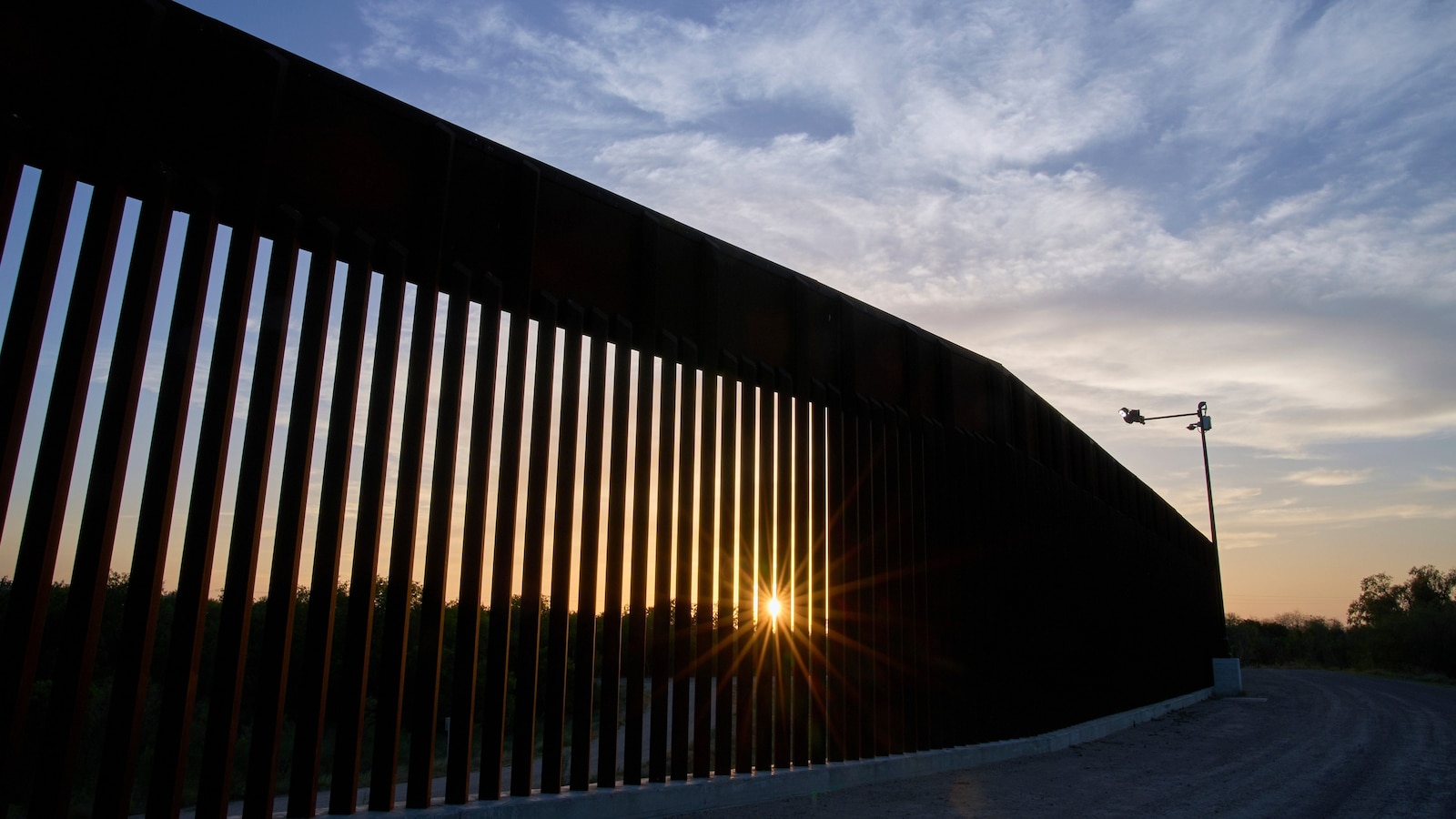
A federal judge has denied the Tohono O'odham Nation's request to halt the Trump administration's...

Netizen tidak senang dengan komentar-komentar yang diberikan

BTS mungkin kembali mengikuti Grammy setelah rekanan mereka, Recording Academy, mengumumkan revisi...
BTS mungkin tidak akan mengubah keputusan untuk mengabaikan Grammy karena deadline pengiriman musik...
Update terbaru tentang keputusan BTS untuk tidak mengirimkan musik mereka untuk dijadikan nominee...
Pihak Recording Academy mengumumkan akan kembali meninju keputusan untuk memperkenalkan kategori...

Sangyeop Sangyeop mengumumkan rencananya untuk menikah dengan seorang non-celebrity, mengejutkan...