



Hawaiian Electric Provides Statewide Power Restoration Update
Hawaiian Electric has issued a comprehensive update on the status of power restoration across the...
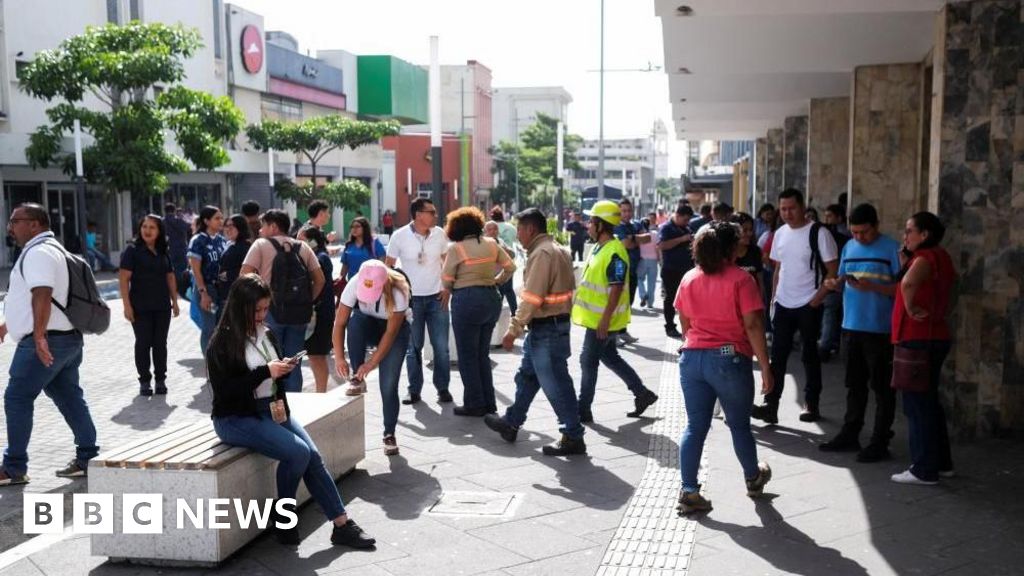
A significant earthquake with a magnitude of 7.3 struck off the coast of southern Mexico, causing widespread concern and triggering a tsunami warning for parts of the Pacific. The earthquake, which occurred on Friday, was felt in several neighboring countries, including Guatemala and El Salvador. According to Mexico's navy secretary, Admiral Raymundo Morales, there was no serious impact reported, but people were advised to stay away from beaches as a precautionary measure. The US Tsunami Warning System issued a warning for possible hazardous tsunami waves along the nearby coasts of Mexico and Guatemala. The warning was later lifted, but people in affected areas were advised to remain observant and exercise normal caution near the sea. The earthquake's epicenter was located near the fishing town of Puerto Madero in Mexico, and it had a depth of 15.2 km, according to the United States Geological Survey (USGS).
The earthquake was felt with moderate intensity in the southern Mexican state of Oaxaca, but no significant damage was reported. Governor Salomón Jara Cruz of Oaxaca stated that the quake was felt with moderate intensity, but no major damage or casualties were reported. Eduardo Ramírez, the governor of the state of Chiapas, which is closest to the epicenter, said there had been no serious impact, but he instructed his cabinet to suspend administrative activities and urged the private sector to do the same. In Guatemala and El Salvador, the tremor shook buildings, triggering evacuations and causing some people to run from their homes. A series of aftershocks with magnitudes between 4.7 and 6 were recorded, adding to the uncertainty and concern in the region. Guatemala's President Bernardo Arévalo said the country's emergency management agency had been deployed in response to the earthquake, and he called on the population to remain calm and follow the recommendations.
The U.S. National Oceanic and Atmospheric Administration (NOAA), which operates the tsunami warning center, forecast waves of less than 0.3m above tide level along the coasts of El Salvador, Colombia, Costa Rica, Ecuador, Nicaragua, Panama, Peru, and Honduras. A tsunami is a series of waves with times between crests ranging from five minutes to an hour that can persist for many hours, according to the agency. In this case, the waves lasted for 12 minutes in Puerto Madero and 28 minutes in Chiapas. NOAA warned that persons caught in the water of a tsunami may drown, be crushed by debris in the water, or be swept out to sea. The agency advised government agencies in the threatened coastal areas to instruct populations at risk and advised people located in those areas to stay alert for information and follow instructions from national and local authorities. The earthquake serves as a reminder of the importance of disaster preparedness and the need for effective early warning systems.
The earthquake's impact was felt across the region, with many people taking to social media to share their experiences and express their concern. The Mexican government's response to the earthquake was swift, with emergency services and aid being deployed to affected areas. The international community also responded, with many countries offering support and assistance to those affected. The earthquake highlights the need for regional cooperation and coordination in disaster response and preparedness. It also underscores the importance of investing in disaster risk reduction and management, including the development of early warning systems and emergency preparedness plans. By working together, countries in the region can reduce the impact of natural disasters and save lives.
In the aftermath of the earthquake, many questions remain about the extent of the damage and the effectiveness of the response. The Mexican government has pledged to conduct a thorough assessment of the damage and to provide support to those affected. The international community will be watching closely to see how the situation unfolds and how the region responds to this disaster. The earthquake serves as a reminder of the importance of disaster preparedness and the need for effective early warning systems. It also highlights the need for regional cooperation and coordination in disaster response and preparedness. By learning from this experience, countries in the region can reduce the impact of natural disasters and save lives.
The earthquake has significant implications for the region, highlighting the need for increased investment in disaster risk reduction and management. The international community has a critical role to play in supporting countries in the region to develop and implement effective disaster risk reduction and management plans. This includes providing technical assistance, funding, and expertise to support the development of early warning systems, emergency preparedness plans, and disaster risk reduction strategies. By working together, countries in the region can reduce the impact of natural disasters and save lives. The earthquake also underscores the importance of community-based initiatives and local responses to disasters, which can play a critical role in saving lives and reducing the impact of disasters.
Looking to the future, it is clear that the region will continue to face significant challenges in terms of disaster risk reduction and management. Climate change, in particular, is likely to exacerbate the impact of natural disasters, making it even more important for countries in the region to invest in disaster risk reduction and management. The international community has a critical role to play in supporting countries in the region to develop and implement effective disaster risk reduction and management plans. This includes providing technical assistance, funding, and expertise to support the development of early warning systems, emergency preparedness plans, and disaster risk reduction strategies. By working together, countries in the region can reduce the impact of natural disasters and save lives. The earthquake serves as a reminder of the importance of disaster preparedness and the need for effective early warning systems, and it highlights the need for regional cooperation and coordination in disaster response and preparedness.
As the region moves forward, it is essential to prioritize disaster risk reduction and management, and to invest in the development of effective early warning systems and emergency preparedness plans. This will require a coordinated effort from governments, international organizations, and local communities, as well as a commitment to providing the necessary funding and resources. By working together, countries in the region can reduce the impact of natural disasters and save lives. The earthquake has highlighted the importance of disaster preparedness and the need for effective early warning systems, and it has underscored the need for regional cooperation and coordination in disaster response and preparedness. As the region looks to the future, it is clear that disaster risk reduction and management will be a critical priority, and that international cooperation and support will be essential in reducing the impact of natural disasters.
In conclusion, the earthquake that struck off the coast of southern Mexico was a significant event that highlighted the importance of disaster preparedness and the need for effective early warning systems. The earthquake had a significant impact on the region, causing widespread concern and triggering a tsunami warning. The Mexican government's response to the earthquake was swift, with emergency services and aid being deployed to affected areas. The international community also responded, with many countries offering support and assistance to those affected. The earthquake serves as a reminder of the importance of disaster preparedness and the need for effective early warning systems, and it highlights the need for regional cooperation and coordination in disaster response and preparedness. As the region moves forward, it is essential to prioritize disaster risk reduction and management, and to invest in the development of effective early warning systems and emergency preparedness plans.
A powerful earthquake hits off the coast of southern Mexico, prompting tsunami warnings and evacuations in the region.
Hawaiian Electric has issued a comprehensive update on the status of power restoration across the...

Darren Pai from Hawaiian Electric shares a critical 5 p.m. update on the ongoing power outage...
Stay informed about Tropical Storm Lala's impact on Hawaii, with updates on warnings, advisories,...
A comprehensive overview of the Sorrento Fire, including its impact, key facts, and future...

Gempa bumi dengan magnitudo 5,0 mengguncang Manggarai, Nusa Tenggara Timur, tidak berpotensi tsunami

Gempa bumi dengan magnitudo 5,0 mengguncang wilayah Manggarai, Nusa Tenggara Timur (NTT), dan tidak...

Netizen tidak senang dengan komentar-komentar yang diberikan

BTS mungkin kembali mengikuti Grammy setelah rekanan mereka, Recording Academy, mengumumkan revisi...
BTS mungkin tidak akan mengubah keputusan untuk mengabaikan Grammy karena deadline pengiriman musik...
Update terbaru tentang keputusan BTS untuk tidak mengirimkan musik mereka untuk dijadikan nominee...
Pihak Recording Academy mengumumkan akan kembali meninju keputusan untuk memperkenalkan kategori...

Sangyeop Sangyeop mengumumkan rencananya untuk menikah dengan seorang non-celebrity, mengejutkan...