


The Independence of the US Department of Justice: Todd Blanche's Uncertain Pledge
The Importance of an Independent US Department of Justice: Understanding Todd Blanche's Remarks
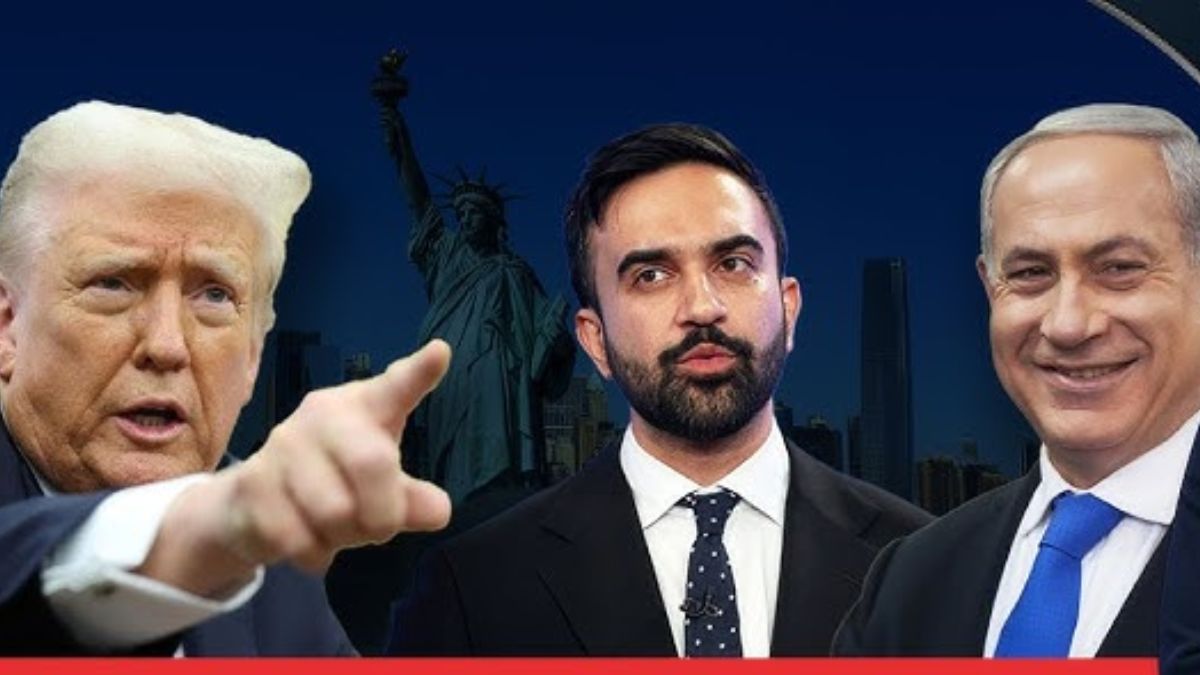)
New York City Mayor Zohran Mamdani has been facing a significant dilemma regarding the potential arrest of Israeli Prime Minister Benjamin Netanyahu, who has been accused of war crimes and crimes against humanity linked to the Gaza conflict. The International Criminal Court (ICC) issued arrest warrants for Netanyahu and former Israeli Defense Minister Yoav Gallant in this regard. Mamdani has stated that he is still weighing the legal implications of such a move and has not yet made a final decision. The mayor's comments have sparked a heated debate over the authority of a New York City mayor to act on an ICC warrant against a foreign head of government. This is a complex issue that involves federal authorities and questions of diplomatic immunity.
In a recent interview with The New York Times, Mamdani revealed that he is consulting with legal experts to determine how his administration would respond to the scenario of Netanyahu visiting New York. Mamdani has been an outspoken critic of Israel's military campaign in Gaza, and his administration has repeatedly argued that international law should be applied consistently. However, Mamdani also emphasized that his administration would ensure the safety of all New Yorkers, regardless of political differences. His comments have raised questions about the limits of local authority and the broader political divide surrounding the Israel-Gaza conflict.
The controversy surrounding Mamdani's comments has gained significant attention amid speculation that Netanyahu could travel to New York later this year, including for the annual United Nations General Assembly. Netanyahu has previously dismissed suggestions that he could face arrest in New York, maintaining that he would not be deterred from traveling to the city. The ICC's decision to issue arrest warrants for Netanyahu and Gallant has been met with resistance from Israel, which has rejected the allegations as politically motivated.
Limited legal precedents exist for how a New York City mayor would implement an ICC arrest warrant. The United States is not a party to the Rome Statute, the treaty that established the ICC. As a result, enforcing an ICC arrest warrant would not fall within the jurisdiction of a municipal government and would instead involve federal authorities. Mamdani's decision could set a significant precedent, both domestically and internationally.
The implications of Mamdani's decision are far-reaching, with potential consequences for international relations, diplomatic immunity, and the rule of law. The case highlights the complexities of enforcing international law in a domestic context and raises questions about the limits of local authority. As the situation continues to unfold, it is essential to explore the possible outcomes and their potential consequences for both New York City and the global community.
In conclusion, Zohran Mamdani's decision regarding the potential arrest of Benjamin Netanyahu is a complex and politically charged issue with significant implications. As the mayor weighs the pros and cons of taking action, it is essential to consider the broader context, including the role of international law, diplomatic immunity, and the potential consequences for international relations. Ultimately, the decision will have far-reaching consequences for both New York City and the global community.
The situation has sparked a heated debate among New Yorkers, with some supporting Mamdani's decision to uphold the ICC warrant and others opposing it. Mamdani's administration has maintained that any decision taken would be grounded in the law, indicating a commitment to upholding the principles of international justice. However, the controversy surrounding the issue has highlighted the challenges of enforcing international law in a domestic context and the need for greater clarity and consistency in applying legal principles.
As the situation continues to unfold, it is essential to explore the possible outcomes and their potential consequences for both New York City and the global community. The controversy surrounding Mamdani's comments has sparked a wider discussion about the role of local authorities in enforcing international law and the need for greater cooperation between national governments to address global challenges.
Netanyahu's possible visit to New York has sparked renewed concerns about the potential for violence, both domestically and internationally. Some have argued that the controversy has the potential to escalate tensions between Israel and the international community, while others believe it can serve as an opportunity to promote greater understanding and cooperation. Regardless of the outcome, one thing is clear: the situation has sparked a necessary conversation about the application of international law and the limits of local authority.
The controversy surrounding Netanyahu's possible arrest has also raised questions about the role of the United States in addressing human rights abuses globally. The US has a long history of criticizing human rights abuses in other countries, but the ICC's decision to issue arrest warrants for Netanyahu has sparked concerns about double standards and selective justice. The situation highlights the need for greater consistency and fairness in applying human rights norms globally.
New York City Mayor Zohran Mamdani's Comments on Israeli Prime Minister Benjamin Netanyahu's Possible Arrest in New York



The Importance of an Independent US Department of Justice: Understanding Todd Blanche's Remarks
Donald Trump orders Pentagon to scale back joint military exercises with South Korea, citing his...
Representative Nancy Mace embarks on a new journey, unveiling her full sleeves of long-concealed...
The decision to cut back on military drills with South Korea has significant implications for...

FITSNews reports on Nancy Mace's transition from outgoing congresswoman to online talk show host,...
Trump directs Hegseth to scale back joint military exercises with South Korea Politico

Netizen tidak senang dengan komentar-komentar yang diberikan

BTS mungkin kembali mengikuti Grammy setelah rekanan mereka, Recording Academy, mengumumkan revisi...
BTS mungkin tidak akan mengubah keputusan untuk mengabaikan Grammy karena deadline pengiriman musik...
Update terbaru tentang keputusan BTS untuk tidak mengirimkan musik mereka untuk dijadikan nominee...
Pihak Recording Academy mengumumkan akan kembali meninju keputusan untuk memperkenalkan kategori...

Sangyeop Sangyeop mengumumkan rencananya untuk menikah dengan seorang non-celebrity, mengejutkan...