




Dallas Cowboys' Next Move: Exploring Adoree' Jackson's Potential Signing After Von Miller's Impactful Contract
Dallas Cowboys' Next Move: Exploring Adoree' Jackson's Potential Signing After Von Miller's...
This article is published in Aerospace Daily & Defense Report, part of Aviation Week Intelligence Network (AWIN), and is complimentary through Aug 16, 2026. For information on becoming an AWIN Member to access more content like this, click here.
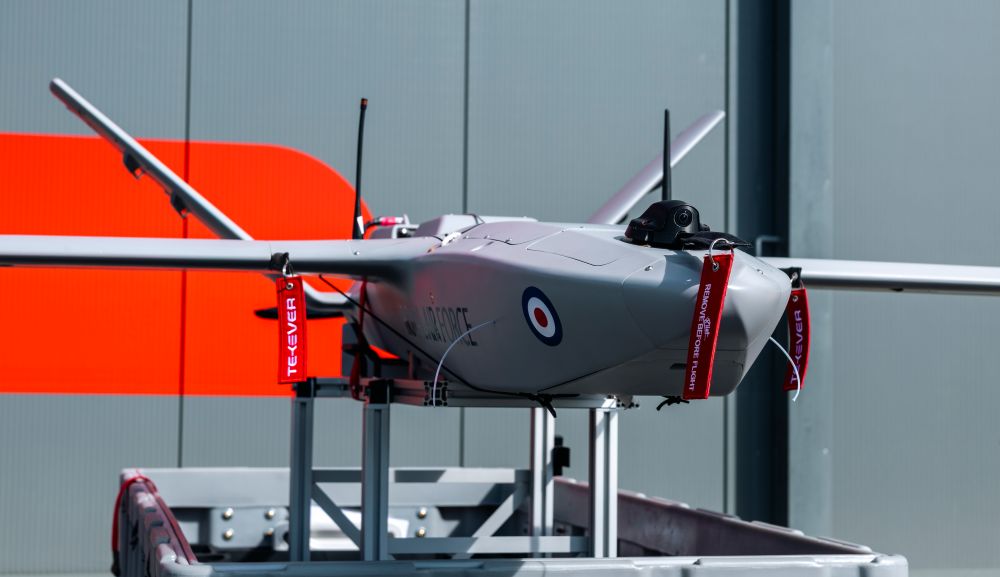
The Royal Air Force (RAF) has revealed its latest low-cost attack drone, Storm Fire, designed for mass production through distributed manufacturing. The unveiling of Storm Fire comes on the heels of the Global Air and Space Chiefs Conference, where RAF Chief of the Air Staff Air Chief Marshal Harv Smyth showcased the drone's capabilities. As part of the Storm family of platforms, Storm Fire is poised to become a game-changer in the realm of unmanned aerial systems (UAS). The Storm family is an emerging collection of platforms that will enable the RAF to dominate the skies, with Storm Fire being one of the most anticipated additions. According to Smyth, the Storm family will form a 'powerful compendium of control of the air capabilities,' solidifying the RAF's position as a major player in modern air warfare.
The Storm Fire drone itself is a 1,000-km one-way attack drone designed to be operated by the RAF Regiment, a ground-based force protection unit of the service. The system is expected to be produced through federated manufacturing, allowing for scalable production in the event of a conflict. With production costs estimated to be less than £20,000 per copy, Storm Fire is set to revolutionize the field of UAS production. While the actual production costs remain uncertain, the RAF's intention is to produce Storm Fire at a low cost, making it an attractive option for mass production. The use of Lanner, a foam-molded lifting body UAS, as the base for Storm Fire was also mentioned. Lanner is an uncrewed aircraft system (UAS) that has been tested by the RAF in conjunction with QinetiQ, demonstrating the RAF's commitment to experimentation and innovation.
The announcement of Storm Fire also highlighted the role of the Collaborative Combat Aircraft (CCA) program, a £300 million initiative that aims to deliver a range of collaborative capabilities, including the Storm Fighter, Storm Chrome, and potentially Storm Fire. Storm Chrome, described by Smyth as an electronic warfare platform, is another key addition to the Storm family. As a low-cost platform, Storm Chrome is expected to survive in contested environments, with further variants planned to increase its range and payload capacity. The integration of such capabilities will enable the RAF to maintain an edge over adversaries, leveraging the rapid technological advancements in UAS development.
The development of the Storm family is part of a larger effort by the RAF to modernize its capabilities and stay ahead of the technological curve. With the Storm family, the RAF aims to create a network-centric warfare approach, integrating UAS, ground-based systems, and air assets to achieve a synchronized effect. According to Smyth, the Storm family will be 'spirally developed and further expanded to remain ahead of the adversary and stay lockstep with today's and tomorrow's rapid technology development.' This commitment to innovation and continuous improvement will undoubtedly propel the RAF to new heights in the realm of military aviation.
The release of Storm Fire comes at an opportune time, as the global security landscape continues to evolve. The increased demand for advanced UAS capabilities has created a pressing need for cost-effective solutions that can be rapidly deployed in response to emerging threats. Storm Fire's design for mass production through distributed manufacturing addresses this pressing concern, providing the RAF with a cutting-edge UAS that can be scaled up quickly in the event of a conflict. As the RAF continues to modernize its capabilities, the Storm family is sure to play a pivotal role in shaping the future of air warfare.
The impact of Storm Fire will extend beyond the military domain, as the adoption of low-cost, mass-producible UAS technology has the potential to disrupt traditional supply chains and manufacturing processes. The use of distributed manufacturing will enable the rapid deployment of UAS components and systems, making it possible to respond quickly to emerging threats. Furthermore, the development of Storm Fire highlights the potential for collaboration and innovation between the military and industry partners, which will be crucial in addressing the complex security challenges of the future.
In conclusion, the unveiling of Storm Fire marks a significant milestone in the evolution of the RAF's UAS capabilities. With its design for mass production, low cost, and advanced features, Storm Fire is poised to revolutionize the field of air warfare. The Storm family, of which Storm Fire is a key member, will undoubtedly shape the future of military aviation, providing the RAF with a network-centric warfare approach that integrates UAS, ground-based systems, and air assets. As the global security landscape continues to evolve, the Storm family will remain a vital component of the RAF's efforts to stay ahead of the technological curve and maintain its position as a major player in modern air warfare.
Revolutionary Low-Cost RAF Attack Drone Designed for Mass Production in Conflict Zones Aviation Week


Dallas Cowboys' Next Move: Exploring Adoree' Jackson's Potential Signing After Von Miller's...

The decision to cut back on military drills with South Korea has significant implications for...
Learn how to check if your car has been searched by Flock cameras and understand the implications...
Tommy John, the four-time MLB All-Star and namesake of the Tommy John surgery, has left a lasting...
Israel's National Security Chief Advocates Mass Killing in Gaza: A Devastating Policy Proposal

Ukraine's military has launched one of its largest aerial attacks of the war, killing at least six...

Netizen tidak senang dengan komentar-komentar yang diberikan

BTS mungkin kembali mengikuti Grammy setelah rekanan mereka, Recording Academy, mengumumkan revisi...
BTS mungkin tidak akan mengubah keputusan untuk mengabaikan Grammy karena deadline pengiriman musik...
Update terbaru tentang keputusan BTS untuk tidak mengirimkan musik mereka untuk dijadikan nominee...
Pihak Recording Academy mengumumkan akan kembali meninju keputusan untuk memperkenalkan kategori...

Sangyeop Sangyeop mengumumkan rencananya untuk menikah dengan seorang non-celebrity, mengejutkan...