



Bankruptcy Hits Rebel Creamery, a Low-Carb Ice Cream Brand Sold at Walmart and Target
Rebel Creamery, a popular low-carb ice cream brand sold at major retailers like Walmart and Target,...

Saudi Aramco and Abu Dhabi National Oil Company (Adnoc) are continuing to ship crude oil through the Strait of Hormuz despite Iran's efforts to effectively close the waterway, according to sources familiar with the situation.
Although the volume of shipments is still significantly lower than pre-conflict levels, the activities of the two companies indicate that some energy supplies are still able to reach the global market.
Iran continues to threaten shipping in the Strait of Hormuz throughout the conflict, according to Bloomberg.
On Friday, Tehran also seized a ship after a US attack, despite the ship reportedly being a sanctioned vessel carrying Iranian oil.
Saudi Aramco declined to comment, while Adnoc has yet to respond.
Since the Strait of Hormuz was practically closed in early March, the global supply crisis has worsened.
Energy companies are now taking greater risks and paying higher costs to send their cargo out of the region.
Most ships are being sailed with their transponders disabled in an attempt to avoid detection.
Of the energy companies with supplies and production stranded in the Persian Gulf, Adnoc was one of the first to resume shipping crude oil, petroleum products, and gas through the strait.
According to sources, Adnoc offered Upper Zakum crude to customers from the waters of Fujairah, which is outside the Persian Gulf, although the cargo normally sails from the Zirku Island.
A supertanker carrying Abu Dhabi oil successfully crossed the Strait of Hormuz with its transponder disabled in late April.
The very large crude carrier (VLCC) Basrah Energy left the Hormuz Strait after loading crude from Zirku Island on April 17, according to data from Vortexa.
After leaving the Persian Gulf, the Basrah Energy shifted to safer waters off the coast of Sohar, where it transferred its cargo to the Maran Mars which then carried the oil to China.
It is unknown whether Adnoc or the buyer of the oil chartered the Basrah Energy.
Data from Kpler shows another supertanker, Fujairah Energy, still in the Persian Gulf near Abu Dhabi with a partly loaded cargo of oil from Zirku Island obtained through inter-tanker transfer.
The ship is reportedly chartered by Adnoc to transport oil to Asia between May 15 and 17 and may still be waiting for additional cargo before attempting to leave the Persian Gulf.
The two tankers are operated by the South Korean-based Sinokor Group.
The company has been actively operating in the Persian Gulf since the conflict began and is offering charter rates that are skyrocketing as many other operators opt out of the risk.
This week, an Adnoc Logistics & Services tanker called the Barakah was attacked by an Iranian drone off the coast of Oman while sailing through the Strait of Hormuz. Data tracking the vessel shows its transponder was disabled at the time of the incident.
Ahead of this week's incident, fuel shipments were also tracked to the UAE port of Hamriyah, where oil products from onshore storage were loaded onto tankers before being shipped out through Hormuz.
Along with Adnoc, several other companies are also continuing to transit the strait, including the Greek Dynacom Tankers Management Limited.
Mercuria Energy Group CEO Marco Dunand previously stated that his company is also able to remove tankers from the region.
“There are many ways to do it,” Dunand said at the FT Global Commodities Summit, adding that the number of tankers crossing Hormuz is more than what is visible in ship tracking data.
A Bloomberg report shows Iranian non-oil flows via Hormuz have plummeted to around 500,000 barrels per day since early March.
Pre-conflict average shipments reached 13.6 million barrels per day.
Shipments since the conflict began have been made by at least 25 tankers, ranging from VLCCs with about 2 million barrels of capacity to Aframaxes with about one-third that capacity.
At least four to five of these are operated by Dynacom, a company based in Athens.
Track the ownership of shareholders with 1% or more holdings in listed companies easily.
Saudi Aramco and Adnoc Secretly Ship Oil Through the Strait of Hormuz IDNFinancials.com
Rebel Creamery, a popular low-carb ice cream brand sold at major retailers like Walmart and Target,...

Marseille's Owner Injects €50.2 Million into the Football Club: A Strategic Move to Secure the...

Rebel Creamery LLC, a major ice cream brand, has filed for Chapter 11 bankruptcy following a...
Major ice cream brand seeks Chapter 11 bankruptcy after lawsuit
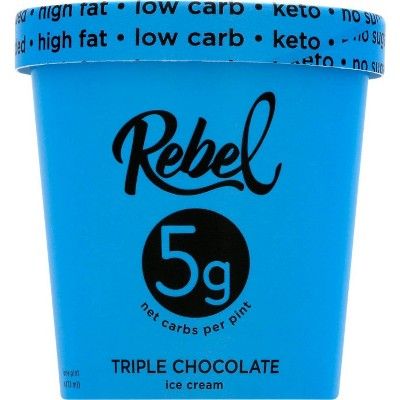
Ice cream brand sold in Houston faces financial repercussions after losing a high-profile lawsuit...

Ice Cream Maker Rebel Creamery Files for Bankruptcy After Being Ordered to Pay $23.8 Million in...

Netizen tidak senang dengan komentar-komentar yang diberikan

BTS mungkin kembali mengikuti Grammy setelah rekanan mereka, Recording Academy, mengumumkan revisi...
BTS mungkin tidak akan mengubah keputusan untuk mengabaikan Grammy karena deadline pengiriman musik...
Update terbaru tentang keputusan BTS untuk tidak mengirimkan musik mereka untuk dijadikan nominee...
Pihak Recording Academy mengumumkan akan kembali meninju keputusan untuk memperkenalkan kategori...

Sangyeop Sangyeop mengumumkan rencananya untuk menikah dengan seorang non-celebrity, mengejutkan...