

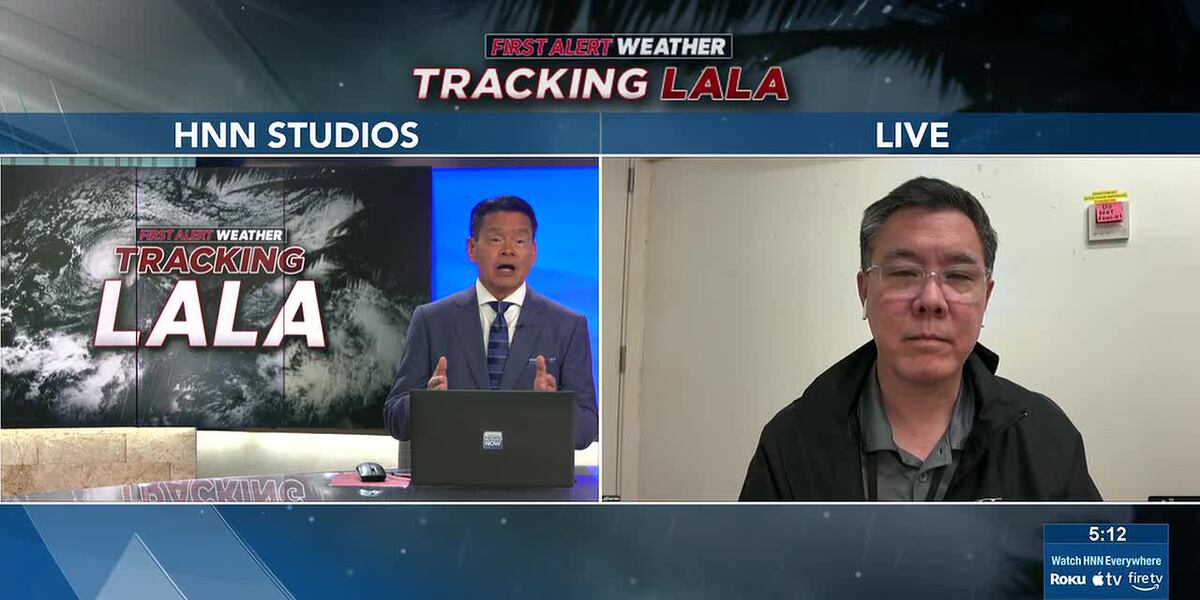
Hawaiian Electric Power Outage Update: 193,000 Affected
Darren Pai from Hawaiian Electric shares a critical 5 p.m. update on the ongoing power outage...

In the aftermath of one of the largest tectonic events to shake Hawai'i in decades, scientists from the University of Hawai'i at Mānoa's Department of Earth Sciences have embarked on a timely mission to deploy a network of temporary seismic sensors across the west flank of Mauna Loa on Hawai'i Island.
According to Sin-Mei Wu, assistant professor in the UH Mānoa School of Ocean and Earth Science and Technology (SOEST), who leads the initiative, 'Capturing the aftershock sequence and seismic structure at close range offers a rare opportunity to better understand the fault geometry and seismic hazards across the Hawaiian Islands.'The rapid mobilization of resources followed a powerful magnitude 6.0 earthquake near Hōnaunau-Nāpōpo'o on May 22, striking at a depth of 22 kilometers and triggering a large earthquake with an ongoing sequence of aftershocks, including a magnitude 4.0. This deep event was driven by plate flexure – the sheer weight of the massive Hawaiian volcanoes bending the underlying oceanic Pacific Plate – unlike shallow earthquakes, which are typically tied to the movement of volcanic magma.While flexure earthquakes represent a significant seismic hazard, they are notoriously difficult to study due to their frequent occurrence offshore, far from land-based monitoring networks. The May 22 event provided a rare opportunity to better understand these hazardous processes, as the epicenter was on land, enabling the deployment of a temporary seismic array to capture detailed aftershock activity.With funding from the SOEST Dean's Office and sensors from the NSF EarthScope Consortium, Wu and graduate students Pablo Urra Tapia and Ian Wynn rushed to Hawai'i Island for a three-day field campaign. 'It was definitely an all-hands-on-deck effort to get this off the ground as quickly as possible,' said Helen Janiszewski, assistant professor of Earth Sciences who supported planning and will focus on data collection and analysis for the project.The team also received essential assistance from Kamehameha Schools, Hakalau Forest National Wildlife Refuge, and Pu'uohonua o Honaunau National Historical Park. 'Their help allowed us to deploy 30 seismic sensors from ma kai to mauka, covering mainshock and aftershock regions,' said Wu. 'Our community partners are critical collaborators as they have enabled us to receive permits and land-access so we could deploy the sensor in time to capture the aftershocks.'The team faced grueling off-road conditions across 80% of the terrain and successfully placed sensors at elevations ranging from 100 feet near the coastline to 7,500 feet into the high-altitude, old lava fields of Mauna Loa. Completed on June 5, the high-resolution array is now actively recording continuous ground vibrations.The enhanced seismic network can detect and characterize smaller earthquakes that carry equally important information about the earthquake source region, said Wu. 'This project exemplifies SOEST's commitment to rapid hazard response, and we expect to gather data that will benefit both scientific research and seismic hazard assessment in Hawai'i.'The research team will collect the seismic data and then begin to analyze their trove of information in August.Notably, the success of this rapid response highlights the importance of community partnerships and collaborative efforts in advancing our understanding of seismic hazards and mitigating their impacts.The University of Hawai'i at Mānoa's Department of Earth Sciences is committed to advancing our knowledge of the Earth's systems and processes, and this initiative exemplifies that commitment.Looking forward, the data collected from this project will provide valuable insights into seismic hazards and contribute to the development of more effective hazard mitigation strategies in Hawai'i and beyond.Ultimately, this research has the potential to save lives, protect communities, and ensure a safer and more resilient future for the people of Hawai'i and the world.Scientists Deploy Seismic Sensors on Mauna Loa After Historic 6.0 Earthquake - A Collaborative Effort to Understand Seismic Hazards
Darren Pai from Hawaiian Electric shares a critical 5 p.m. update on the ongoing power outage...

Stay informed about Tropical Storm Lala's impact on Hawaii, with updates on warnings, advisories,...
A comprehensive overview of the Sorrento Fire, including its impact, key facts, and future...

A devastating brush fire has been raging in San Diego, necessitating the expertise of local fire...
The Devastating Impact of Historic Floods in Indiana: Death Toll Continues to Rise

As the weekend draws to a close, Hawaii residents are bracing themselves for the potential impact...

Netizen tidak senang dengan komentar-komentar yang diberikan

BTS mungkin kembali mengikuti Grammy setelah rekanan mereka, Recording Academy, mengumumkan revisi...
BTS mungkin tidak akan mengubah keputusan untuk mengabaikan Grammy karena deadline pengiriman musik...
Update terbaru tentang keputusan BTS untuk tidak mengirimkan musik mereka untuk dijadikan nominee...
Pihak Recording Academy mengumumkan akan kembali meninju keputusan untuk memperkenalkan kategori...

Sangyeop Sangyeop mengumumkan rencananya untuk menikah dengan seorang non-celebrity, mengejutkan...