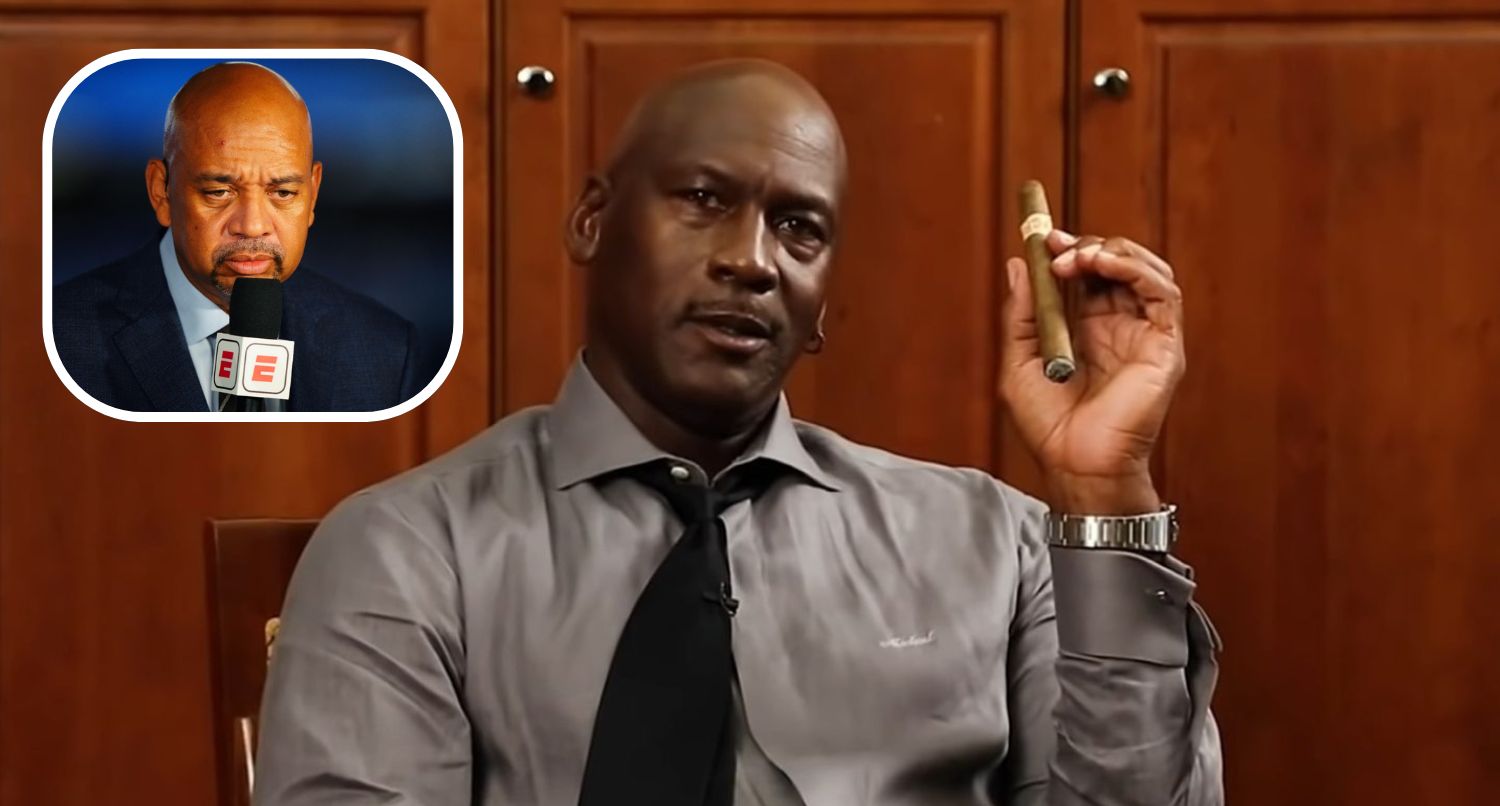
Michael Jordan joining the National Basketball Association (NBA) on NBC might not be what basketball fans were hoping for, but it was enough to put ESPN on edge. The six-time champion's decision to associate with NBC for their reboot season as an NBA rights holder sparked a frenzy of excitement and anxiety within the sports media landscape. Michael Wilbon, a renowned sports journalist and a close friend of Jordan's, recently shared his insights on the matter in an interview. According to Wilbon, ESPN's panic stems from a common misconception that Jordan would be a regular analyst for NBC. This notion, however, was never supported by any concrete evidence or agreement between Jordan and NBC.
The lack of information about Jordan's role on NBC prompted fans and media to speculate about his potential involvement. This speculation led many to believe that Jordan would appear in studio for big events, but this was never the case. As it turned out, Jordan's absence on NBC during the season ultimately left fans disappointed with the partnership. Wilbon, however, was not surprised by Jordan's limited role, citing his extensive experience with the media personality. He revealed that he had more conversations with Jordan than anyone else at NBC or Disney, and he never believed that Jordan would do much more than he did.
People at Disney got panicky, thinking that Jordan was going to be on every show, every interview, and every big event, he explained. No, he's not. Use some common sense. He's not. According to Wilbon, Jordan was never interested in doing media; he was just part of an incredible NBA on NBC marketing ploy. The network cleverly crafted a public relations stunt to attract attention and excitement. Jordan's lone conversation with Mike Tirico could have been the greatest one-on-one interview in NBA history, but it still would have failed to meet the expectations that derived from NBC's initial announcement.
Wilbon's account provides valuable insights into the behind-the-scenes dynamics surrounding Jordan's involvement with NBC. He suggests that ESPN was likely annoyed when it learned that Jordan was joining NBC, and they probably expected Wilbon and Stephen A. Smith to help them get the right of first refusal. However, the reality was that Jordan was never interested in doing media, and his role on NBC was largely ceremonial. As a result, ESPN's panic was justified, but not for the reasons they thought.
Wilbon's comments also offer a nuanced perspective on the sports media landscape. He points out that networks often engage in hype and exaggeration to attract attention and viewers. This can lead to unrealistic expectations and disappointment. In the case of Jordan and NBC, the hype surrounding his involvement was never supported by concrete evidence. The network's marketing ploy was successful in creating excitement, but it ultimately fell short of meeting the expectations of fans and media.
Looking ahead, the Michael Jordan misinterpretation serves as a reminder of the importance of accurate information and realistic expectations in the sports media landscape. The episode highlights the challenges of managing public perception and the dangers of speculation and misinformation. As the sports media landscape continues to evolve, it is essential to remain critical and vigilant in our pursuit of knowledge and understanding. Ultimately, the Michael Jordan misinterpretation is a valuable lesson in the importance of accuracy and reality.
The incident also underscores the complexities of relationships between sports figures, media outlets, and their audiences. Wilbon's close friendship with Jordan and his insight into the media personality's intentions offer a unique perspective on the matter. The episode serves as a reminder of the complexities of the sports media landscape and the importance of critical thinking and nuanced analysis.
Ringkasan
The Michael Jordan Misconception: Why ESPN Was Panicked Over His NBA on NBC Role Awful Announcing