



Trump Administration Announces Reduction in U.S.-South Korea Joint Military Exercises
The decision to cut back on military drills with South Korea has significant implications for...
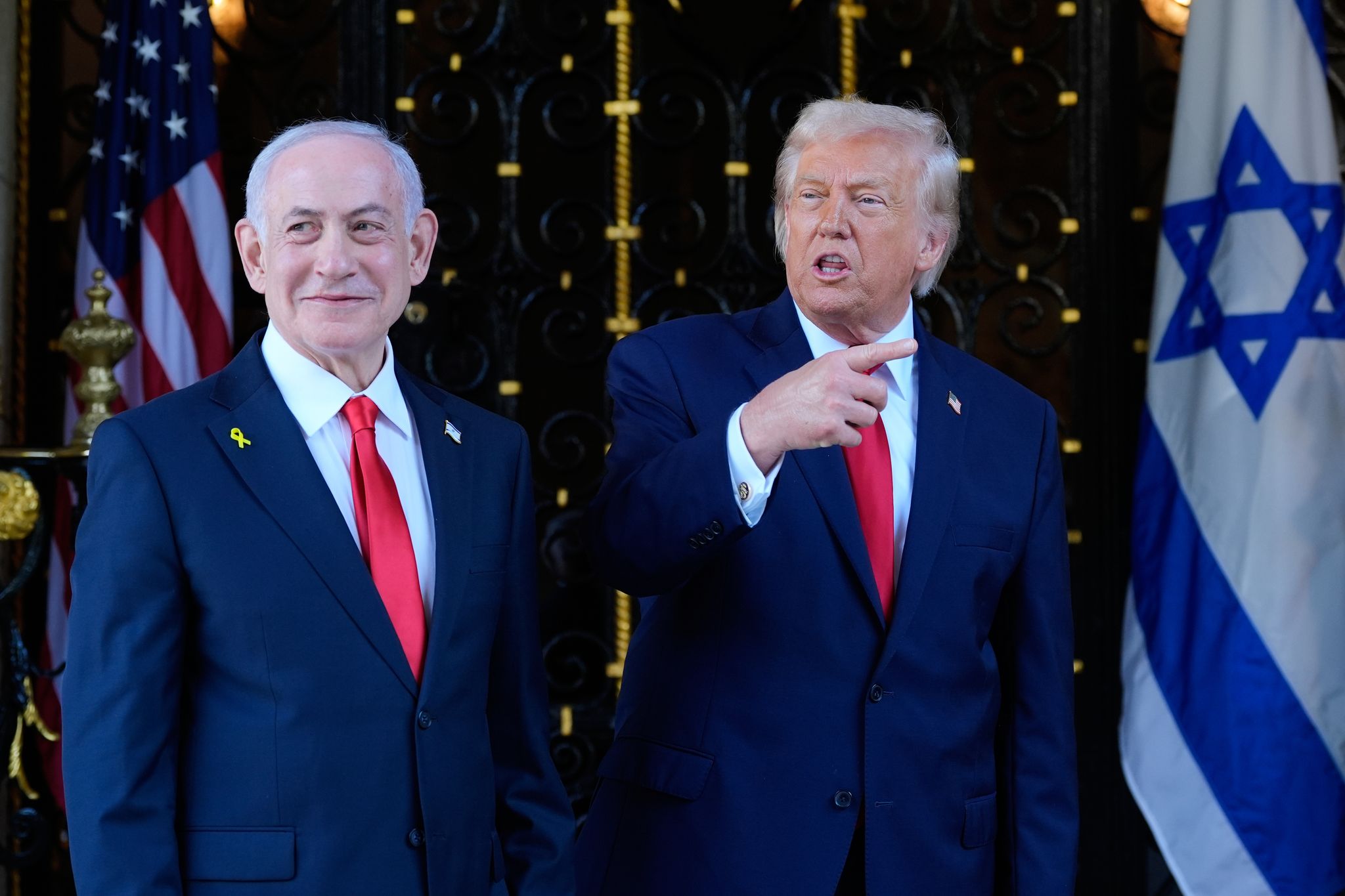
As the news of a deal between the United States and Iran spread like wildfire, Israeli Prime Minister Benjamin Netanyahu was caught off guard. The agreement marked a new chapter in the volatile relationship between Trump and Netanyahu, with Trump maintaining the upper hand throughout.
The tension between the two leaders stemmed from their differing agendas on the Iran-Israel conflict. Trump, eager to wrap up the war before the US midterm elections, sought a quick resolution, while Netanyahu, facing his own electoral challenges, wanted a decisive victory over Iran and its proxy Hezbollah.
Despite Netanyahu's assurances to Trump that the Iranian regime would crumble quickly, the outcome failed to materialize. Instead, Netanyahu ignored Trump's calls for restraint, escalating the conflict with the bombing of an Iranian gas field. The inevitable response from Iran was a retaliatory attack on Gulf Arab energy infrastructure, straining the fragile balance of power in the region.
At a critical juncture, Trump and Netanyahu engaged in a heated exchange over the potential consequences of an armed conflict with Hezbollah in Lebanon. Trump reportedly called Netanyahu 'expletive crazy' for the possible blowback on US talks with Iran. The Jerusalem Post noted that this verbal spat did not necessarily indicate a deep-seated rift between the two leaders, but rather a manifestation of the tension.
Former US ambassadors to Israel, Daniel Kurtzer and Aaron David Miller, offered a contrasting view in their analysis, Emissary, a blog published by the Carnegie Endowment. They emphasized that Netanyahu's drive for regime change in Iran is well-documented, but that he was not the driving force behind Trump's decision to attack. Instead, they argued that Trump had been inclined towards war long before Netanyahu's prodding.
'These aren't equal partners,' Kurtzer and Miller said, highlighting Trump's significant leverage over Netanyahu, who requires US support to remain in office. When Trump announced the end of the war, Netanyahu promptly stood down, a testament to the imbalance of power.
Robert Jordan, a diplomat and professor at the John G. Tower Center for Public Policy and International Affairs at SMU, weighed in on the dynamics of US-Israeli relations. He observed that Trump's anger towards Netanyahu does not necessarily indicate a break in their relationship, citing past instances of heated phone calls between world leaders that have ultimately proved resilient.
As Netanyahu faces mounting pressure from within his own government to challenge the Iran deal, he must navigate the delicate balance between defying Trump's wishes and maintaining his nation's sovereignty. Trump's announcement caught Netanyahu off guard, but the latter may yet find ways to hinder the agreement's implementation, especially as the vague language and terms of the deal create uncertainty.
Ultimately, Netanyahu may have the capacity to slow down Trump's urgent efforts to claim a victory, but the real power dynamic leans decisively in Trump's favor. The US president remains unyielding, having declared his authority over the agreement, and it will be Netanyahu who has to make concessions if the deal is to hold.
In the coming months, Netanyahu and Trump will face intense scrutiny as the Iran deal is implemented. Despite their current disagreement, the dynamics of US-Israeli relations may undergo a transformative shift, with both leaders facing unprecedented challenges in navigating the treacherous landscape of Middle Eastern politics.
Analysis of Trump's deal with Iran and its implications on Netanyahu's Israel, exploring the complex dynamics and future prospects.
The decision to cut back on military drills with South Korea has significant implications for...

FITSNews reports on Nancy Mace's transition from outgoing congresswoman to online talk show host,...
President Trump's recent order for the Pentagon to curtail military exercises with South Korea has...
Trump directs Hegseth to scale back joint military exercises with South Korea Politico
Donald Trump's announcement of reduced military exercises with South Korea has sent shockwaves...
US President Trump urges the Pentagon to significantly reduce military exercises with South Korea,...

Netizen tidak senang dengan komentar-komentar yang diberikan

BTS mungkin kembali mengikuti Grammy setelah rekanan mereka, Recording Academy, mengumumkan revisi...
BTS mungkin tidak akan mengubah keputusan untuk mengabaikan Grammy karena deadline pengiriman musik...
Update terbaru tentang keputusan BTS untuk tidak mengirimkan musik mereka untuk dijadikan nominee...
Pihak Recording Academy mengumumkan akan kembali meninju keputusan untuk memperkenalkan kategori...

Sangyeop Sangyeop mengumumkan rencananya untuk menikah dengan seorang non-celebrity, mengejutkan...