



Tereza Valentova Outlasts Elina Svitolina in an Uplifting Thriller at Cincinnati
Elina Svitolina vs Tereza Valentova · Round 2 · Cincinnati Tennis.com - A nail-biting encounter...

Hydration breaks take place midway through each half at the World Cup Molly Darlington/Getty Images
The rules of association football are forever evolving, but their core principles remain the same.
The field must be rectangular, players start with 11 players on each team, and outfield players aren’t allowed to handle the ball (well, unless the wind is blowing in a westerly direction on an even day of the month in which case accidental handball is a penalty, according to the very straightforward handball rules of 2026).
Another key one is that matches comprise two halves lasting 45 minutes each. Or do they?
This World Cup has seen the introduction of mandatory hydration breaks midway through the halves of all matches. So what’s that all about? And how has it impacted the opening games? We have some questions.
FIFA announced the three-minute hydration breaks last December, which seemed a sensible move given the heat and humidity levels expected during the tournament. A surprising element of the move was that they made them mandatory, whatever the weather.
The laws of the game dictate that in certain weather conditions, i.e. high humidity and temperatures, ‘cooling breaks’ usually lasting 30 to 90 seconds are allowed to allow, in the words of the International Football Association Board (IFAB) ‘the body’s temperature to fall’.
IFAB states these are different from drinks breaks, which are: ‘…of no more than one minute, (for) players to rehydrate; these are different from ‘cooling’ breaks.
FIFA said the ‘streamlined and simplified’ version of breaks seen at previous tournaments, including last year’s Club World Cup, would see the referee stop the game 22 minutes into each half to allow rehydration.
‘There will be no weather or temperature condition in place, with the breaks being called by the referee in all games, to ensure equal conditions for all teams, in all matches,’ the announcement added.
It was also stated that it was irrelevant whether there was a roof over the stadium or what the temperature was.
We saw the first signs of this in the opening two matches, Mexico versus South Africa and South Korea against the Czech Republic.
With breaks coming as soon after the 22-minute mark as possible (i.e. whenever the ball goes out of play or the referee deems it an appropriate time to pause), it throws open the feasibility of the match’s momentum being completely altered.
If a team is under severe pressure at around that time, perhaps facing a barrage of shots or corners, for example, a hydration break brings a natural end to that momentum, just like the half-time interval would. The Czech Republic were well on top during the first half against South Korea, but the hydration break abruptly ended that spell of pressure, and when play resumed, there was a lengthy period of pretty sedate play.
The breaks also throw open the possibility of teams slowing the game down to get to the break. Perhaps they’ll even keep the ball in the corner for the hydration break. Either way, the stoppages effectively make the match one of four quarters, not two halves.
Some channels have used the opportunity to insert commercials into the hydration breaks.
In the U.S., Fox missed part of the restart in the second half of the Mexico match, with viewers cutting from commercials straight to live play and missing a number of seconds.
In the UK, ITV didn’t go to adverts, instead showing scene shots and/or replays of previous incidents. The BBC, of course, won’t go to adverts because it does not broadcast traditional commercial advertising.
In Germany, there was a split, with adverts shown on Magenta but not on ARD.
Strangely, no. Despite the breaks being mandatory during every half of every match and lasting three minutes each time, in the opening two games, the referee let the clock run on, as did broadcasters.
This led to four minutes being added on at the end of the first half of Mexico versus South Africa, despite the half having no substitutions or lengthy stoppages.
In the South Korea match, play was allowed to restart despite them scoring 21 minutes and 37 seconds into the second half, which led to a stop-start period of play when the clock kept rolling…
68:45 — Play restarted with the Czech Republic kicking off
69:02 — After 17 seconds of play, when a foul occurred, the referee signalled the start of the hydration break
71:52 — Play restarted again with a Czech Republic free kick.
So, from the goal being scored to play restarting after the hydration break, there were 17 seconds of football while the clock rolled on for five minutes and 16 seconds.
There were two more goals and three more stoppages for substitutes during the half, but the fourth official only added on six minutes.
Again, this wasn’t hugely noticeable in the Mexico match, with a tremendous amount of noise made throughout the game at the Azteca, but naturally, a three-minute break offers fans the opportunity to head to the toilet or the bar (or both).
As we often see at the start of second halves, expect to spot a number of empty seats immediately after hydration breaks have finished.
Well, there definitely feels like a mission-creep element to this. Football advertising is an extremely lucrative business, particularly during the World Cup, and broadcasters will undoubtedly enjoy the extra income the hydration breaks allow.
In the UK, ITV has called the tournament a ‘six-week summer Super Bowl moment’ for television advertising, with extra matches meaning much more money, and that’s even without them screening adverts during hydration breaks.
Kelly Williams, managing director of commercial at ITV, told The Guardian that its advertising revenues are 30 per cent higher than for Euro 2024.
‘This will be our most commercially successful tournament ever,’ she said. ‘It is not just one game but six weeks of really big TV audiences. It is effectively our six-week summer Super Bowl moment.’
The genie has perhaps been let out of the bottle, and it would be no surprise to see this introduced in other competitions.
Conversely, official breaks may help end the rather ludicrous practice of goalkeepers feigning injury midway through a half so their team-mates can receive tactical instructions, as managers are allowed to talk to the players during hydration breaks.
Spot the pattern. Connect the terms
Find the hidden link between sports terms
The Surprising World of World Cup Hydration Breaks: Unraveling their Purpose and Impact - The Athletic
Elina Svitolina vs Tereza Valentova · Round 2 · Cincinnati Tennis.com - A nail-biting encounter...
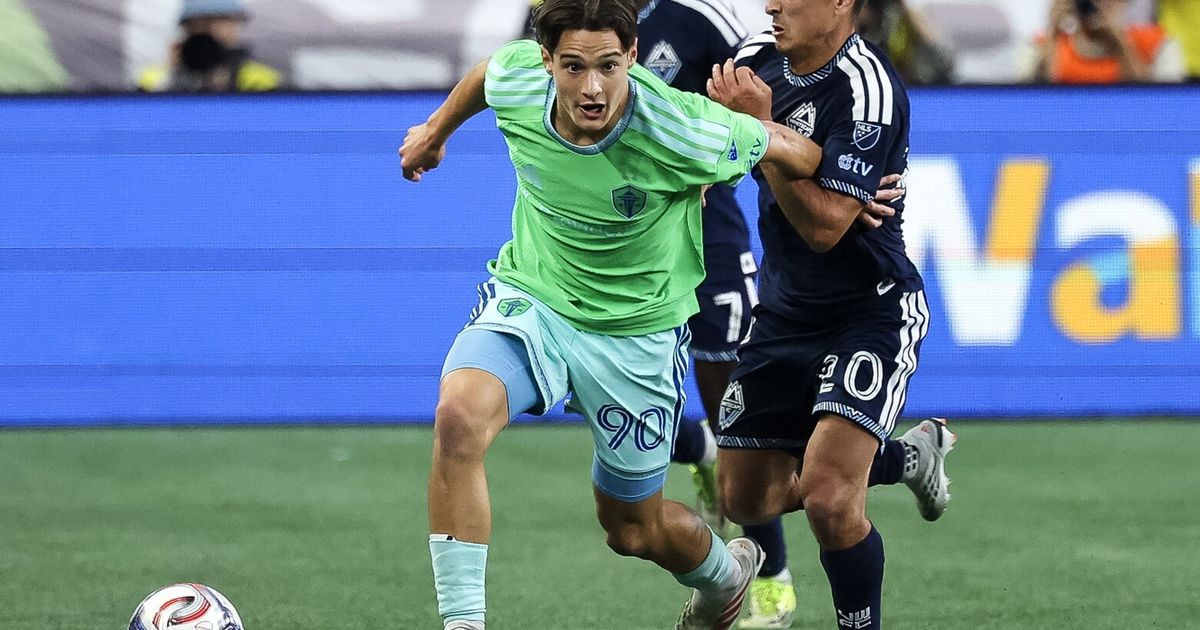
The Seattle Sounders take on the Vancouver Whitecaps in an electrifying match, with the two teams...

Ally Sentnor's 1st Angel City FC goal salvages draw with Washington ocregister.com

Watch the live action of Tijuana vs. Cruz Azul, all the latest news, analysis, and match scores...

The highly anticipated match between Lorenzo Sonego and Frances Tiafoe is set to take place in the...
.jpg?w=1120&h=630)
Dallas Cowboys' Next Move: Exploring Adoree' Jackson's Potential Signing After Von Miller's...

Netizen tidak senang dengan komentar-komentar yang diberikan

BTS mungkin kembali mengikuti Grammy setelah rekanan mereka, Recording Academy, mengumumkan revisi...
BTS mungkin tidak akan mengubah keputusan untuk mengabaikan Grammy karena deadline pengiriman musik...
Update terbaru tentang keputusan BTS untuk tidak mengirimkan musik mereka untuk dijadikan nominee...
Pihak Recording Academy mengumumkan akan kembali meninju keputusan untuk memperkenalkan kategori...

Sangyeop Sangyeop mengumumkan rencananya untuk menikah dengan seorang non-celebrity, mengejutkan...