





Pemerintah Kabupaten Aceh Tamiang: Bumi Muda Sedia Pulih dan Bangkit
Pemerintah Kabupaten Aceh Tamiang: Bumi Muda Sedia Pulih dan Bangkit — Informasi Terbaru
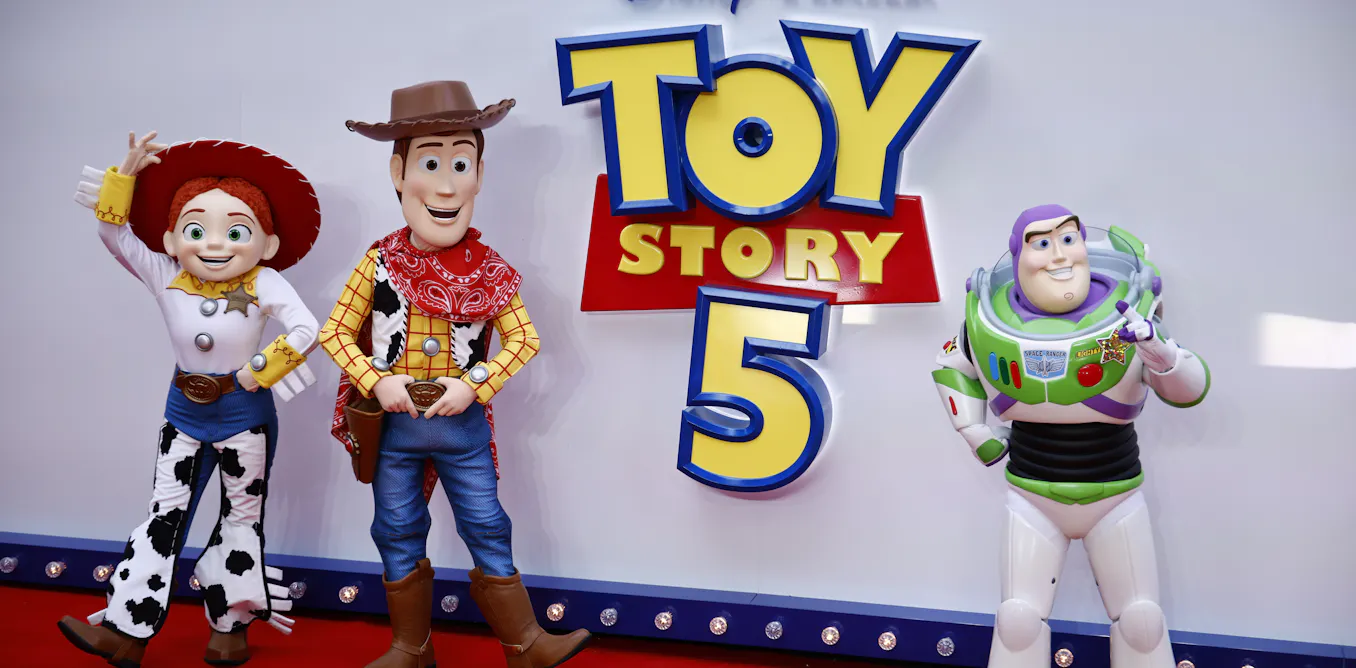
Toy Story 5 will be released in cinemas this Thursday. The latest film in the franchise addresses a dilemma many parents face: what happens to playtime when children become obsessed with screens?
The original Toy Story movie was released in 1995. The generation of viewers who grew up with toys Woody, Buzz, and Jessie are now parents themselves.
The latest film introduces a new character – Lilypad (a tablet). Eight-year-old Bonnie becomes obsessed with Lilypad and screen time at the expense of her old toys. As Jessie laments, “I’m losing Bonnie to this device.”
I’m an early childhood researcher with a focus on both digital technology and play. While Toy Story 5 might seem like a cautionary tale, perhaps the time has passed for an either/or debate about technology in children’s lives.
Technology is all around children, at both home and school and in communities. We need to find ways to combine the traditional with digital to create valuable play opportunities.
This means we don’t have to think of play as “tech vs traditional” toys.
When we think of toys, we traditionally think of two kinds.
They can be self-created from found items at home or outside, such as sticks, rocks, or a cardboard box.
Children can transform these ordinary items as they use their imaginations. This may be a stick that holds special powers, or a rock that becomes a pet. Or like a character introduced in Toy Story 4, Forky, who was made with a spork and googly eyes.
Toys can also be items specifically intended to be a toy, such as a car, dolls, dress-ups, or blocks. These more “traditional” toys activate children’s physical engagement as they push, pull, build, and manipulate objects. They also help children pretend – for example, driving a car around a town play mat, or hosting a tea party. This helps them understand daily life.
Children decide what the toy becomes, how it is used, the story that unfolds, and the problems that need solving.
But we know these kinds of toys are not the whole story in our modern world. The United Nations’ children’s agency UNICEF has advocated for all children to have access to safe, appropriate digital technologies so they are not left behind their peers in terms of skills, culture, and development.
Children have been exposed to digital toys since the arrival of computer games in the 1970s. Toy Story 2 even introduced the idea of video games. Buzz’s character could run, jump, use his wings to double-jump, spin, and activate his wrist laser in his virtual battle of enemies.
But access became much more widespread with the rise of smartphones and tablets over the past 15 years. Children can use digital devices to play games, watch videos, and programs, and talk to each other. Some toys also mix both worlds – for example, a virtual pet that needs “feeding” and “daily care.”
This can potentially expand children’s play and enhance their social, storytelling, and problem-solving skills – depending on what they are playing.
But families will likely be familiar with potential risks around too much time on screens. These include possible impacts on physical, behavioral, and mental health.
It is essential for children to have a range of play experiences. For example, time spent inside and outside, movement, and quiet time, imaginative play, and games with rules, solo play, and play with others.
Research shows children can move fluidly between digital and non-digital worlds and create a blended play universe.
We can also view tech and traditional toys in this way. It’s not a question of one or the other, but a balanced and thoughtful mix of the two.
There are three practical things families can do to support their child’s play across both traditional toys and their tech counterparts.
You can use a screen to extend other forms of play, rather than replace it.
For example, a child might be interested in a worm they notice in the garden and use an iPad or your smartphone to find out more about it. When they are looking up “backyard worms,” they might discover other types of worms to try and find in the garden.
In this way, digital and non-digital toys can not only coexist but strengthen each other.
Additionally, not all toys – digital or physical – are created equal. Well-designed digital toys and resources avoid overstimulation and encourage problem-solving, collaboration, and storytelling.
Children should be in control of their play and how they interact with their toys.
Adults should look for invitations to join children’s play. Talk with children about what they are doing, get to know what they are interested in playing, and take time to explore playful opportunities.
Involving in-person interactions into digital play is also beneficial – for example, playing video games with family or friends to build real-life connections.
The latest instalment of the film franchise addresses a dilemma many parents face: what happens to playtime when children become obsessed with screens?
Pemerintah Kabupaten Aceh Tamiang: Bumi Muda Sedia Pulih dan Bangkit — Informasi Terbaru
Delve into the captivating world of 'Ice Princess', a film that showcased the talents of Hayden...

Acara 600 ribu porsi kulinier gratis di Monas, menghidupkan semangat kebangsaan dan memperkuat rasa...

Meninggalnya Hayden Panettiere, aktris Amerika Serikat, telah mengejutkan dunia hiburan dengan...

Cinema XXI Mencapai Titik Puncak dalam Menggunakan Dana IPO Rp217 Triliun

Hayden Panettiere, bintang televisi Amerika yang terkenal dengan perannya dalam serial 'Heroes' dan...

Netizen tidak senang dengan komentar-komentar yang diberikan

BTS mungkin kembali mengikuti Grammy setelah rekanan mereka, Recording Academy, mengumumkan revisi...
BTS mungkin tidak akan mengubah keputusan untuk mengabaikan Grammy karena deadline pengiriman musik...
Update terbaru tentang keputusan BTS untuk tidak mengirimkan musik mereka untuk dijadikan nominee...
Pihak Recording Academy mengumumkan akan kembali meninju keputusan untuk memperkenalkan kategori...

Sangyeop Sangyeop mengumumkan rencananya untuk menikah dengan seorang non-celebrity, mengejutkan...