



Trump Administration Announces Reduction in U.S.-South Korea Joint Military Exercises
The decision to cut back on military drills with South Korea has significant implications for...
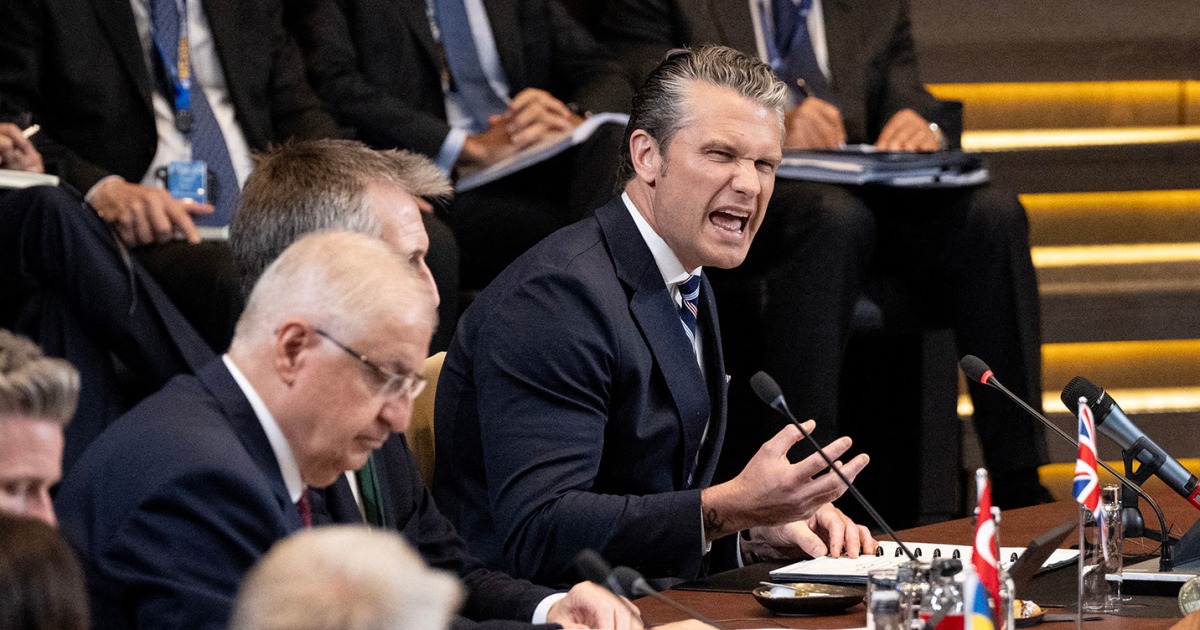
The US Defense Secretary, Pete Hegseth, has publicly criticized NATO allies for their lack of commitment to their own defense, sparking a significant shift in the US approach to European security. Hegseth's remarks, made during a meeting of NATO defense ministers in Brussels, emphasized the need for NATO allies to take greater responsibility for their own defense.
Hegseth announced a six-month Pentagon review of American forces in Europe, which will assess the need for US military presence on the continent. The review is expected to be a critical examination of NATO's capabilities and its ability to deter potential threats. Hegseth stated that the review will be designed to ensure that NATO is moving quickly and irreversibly towards Europe taking the lead in its own defense.
Hegseth's comments were seen as a strong rebuke to NATO allies, who have been criticized for their lack of investment in their own defense. The US has long been the primary contributor to NATO's military capabilities, and Hegseth's remarks suggest that this may no longer be sustainable. He stated that the US will be investing $1.5 trillion in its own defense in 2027, which will send a message to the world that America is building an arsenal of freedom.
The US Defense Secretary also emphasized the need for NATO to become a more effective and efficient military alliance. He called for a reboot of the 32-nation organization, which he referred to as NATO 3.0. This new version of NATO would be capable of deterring any threat and would have real military capabilities. Hegseth stated that NATO 3.0 is a post-Cold War recognition that NATO needs to go back to being a real hard-line military alliance.
Hegseth's remarks came after the US announced that it would no longer supply certain warships and aircraft to its allies in the event of an attack. This decision has significant implications for European security and has raised concerns among NATO allies about their ability to defend themselves. The US has stated that it needs to be able to plan for two simultaneous conflicts and wants more military resources at hand should a conflict break out with China in the Indo-Pacific region.
The situation has significant implications for the future of European security and the role of the US in NATO. Hegseth's remarks suggest that the US is willing to take a tougher stance with its allies and to push for greater burden-sharing within the alliance. This could lead to significant changes in the way that NATO operates and could potentially lead to a more efficient and effective military alliance.
As the situation continues to evolve, it is clear that the US and its NATO allies are at a critical juncture. The US is seeking to redefine its role in European security, and its allies are being forced to confront the reality of their own defense capabilities. The outcome of this process will have significant implications for the future of European security and the role of the US in NATO.
In the coming months, the US and its NATO allies will be working to implement the changes announced by Hegseth. This will involve a significant shift in the way that NATO operates, with a greater emphasis on European defense capabilities and a more efficient use of resources. The US will also be investing in its own defense capabilities, which will send a strong message to potential adversaries.
Overall, the situation is complex and multifaceted, with significant implications for the future of European security. As the US and its NATO allies work to implement the changes announced by Hegseth, it is clear that the road ahead will be challenging. However, with a renewed focus on burden-sharing and a more efficient use of resources, there is the potential for a stronger and more effective NATO alliance.
Pete Hegseth's remarks signal a significant shift in the US approach to European security, emphasizing the need for NATO allies to take greater responsibility for their own defense


The decision to cut back on military drills with South Korea has significant implications for...
President Donald Trump Orders Pentagon to Scale Back Joint Exercises with South Korea as Part of...
The 2017 US-South Korea military drills were scaled back following a meeting between US President...
The decision to reduce US joint military exercises in South Korea has significant implications for...
In a surprise move, President Trump has announced the cancellation of military drills with South...
The United States is reportedly considering imposing new sanctions on a Brazilian judge, according...

Netizen tidak senang dengan komentar-komentar yang diberikan

BTS mungkin kembali mengikuti Grammy setelah rekanan mereka, Recording Academy, mengumumkan revisi...
BTS mungkin tidak akan mengubah keputusan untuk mengabaikan Grammy karena deadline pengiriman musik...
Update terbaru tentang keputusan BTS untuk tidak mengirimkan musik mereka untuk dijadikan nominee...
Pihak Recording Academy mengumumkan akan kembali meninju keputusan untuk memperkenalkan kategori...

Sangyeop Sangyeop mengumumkan rencananya untuk menikah dengan seorang non-celebrity, mengejutkan...