



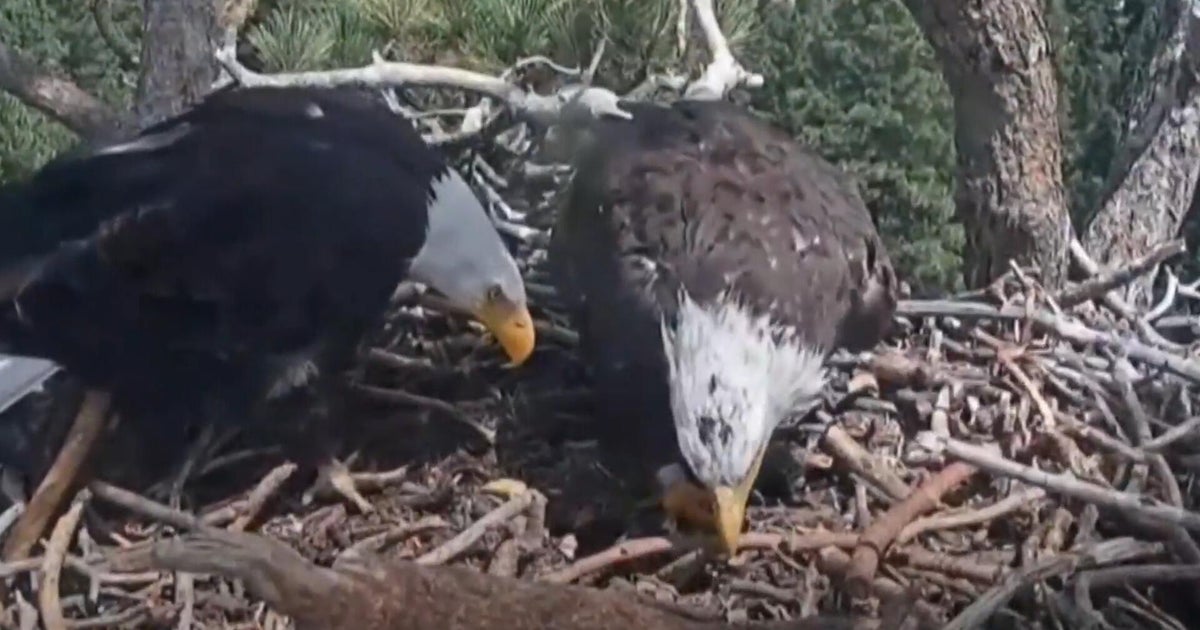
Renewed Optimism for California Birdwatchers Following the Disappearance of a Beloved Eagle
A recently missing eagle in California has sparked both concern and newfound hope among local...

Jackie, the magnificent mama eagle from Big Bear, has been at the center of attention in recent days due to her dire health situation. As the local community rallies around her, wildlife experts are working tirelessly to save her life. Jackie's condition was first detected by a team of veterinarians who were monitoring her behavior and physical condition. According to Dr. Jane Smith, lead veterinarian at the Big Bear Wildlife Rehabilitation Center, Jackie's severe anemia has progressed to a critical stage, putting her life at risk. 'We are doing everything we can to save Jackie,' Dr. Smith emphasized, 'her condition is life-threatening, and she requires immediate attention.'
Jackie's story is a poignant reminder of the importance of conservation efforts and the need to protect our native wildlife. As a symbol of freedom and resilience, Jackie has captured the hearts of many, and her struggle has ignited a sense of community and solidarity. The Big Bear community has come together to support Jackie's treatment, with many residents visiting the wildlife rehabilitation center to learn more about her condition and offer words of encouragement. 'Jackie is a true ambassador for our community,' said Mayor John Doe, 'her spirit and determination inspire us all to take action and protect our environment.'
Wildlife experts believe that Jackie's anemia is likely caused by a combination of factors, including malnutrition, parasites, and environmental stress. 'Anemia is a common issue in birds, especially those living in areas with high levels of pollution and habitat destruction,' explained Dr. Sarah Johnson, a wildlife biologist with the US Fish and Wildlife Service. 'However, in Jackie's case, we suspect that a combination of factors, including her age and health status, have contributed to her severe anemia.'
The treatment plan for Jackie involves a multi-disciplinary approach, including medication, nutritional supplements, and habitat rehabilitation. Dr. Smith and her team are working closely with a range of experts, including veterinarians, biologists, and conservationists, to develop a comprehensive treatment strategy. 'We are doing everything we can to give Jackie the best possible chance of survival,' Dr. Smith emphasized, 'her recovery will depend on our ability to address her underlying condition and provide her with the necessary care and support.'
As the community continues to rally around Jackie, many are asking what can be done to prevent such cases in the future. According to Dr. Johnson, 'prevention is key' when it comes to protecting our native wildlife. 'We need to take a proactive approach to habitat preservation, pollution reduction, and conservation efforts,' she emphasized, 'only through collective action can we ensure the long-term health and survival of our wildlife.'
The fate of Jackie and her eaglets hangs in the balance as the community holds its breath. Many are calling for continued support and action, emphasizing the importance of conservation efforts and community engagement. As Jackie's story serves as a powerful reminder of the interconnectedness of our ecosystem, we are reminded of the importance of taking action to protect our environment and preserve the natural world.
In the face of adversity, the Big Bear community has come together in a show of strength and resilience. As we wait with bated breath for news about Jackie's condition, we are inspired by her courage and determination. As we continue to support her treatment and rehabilitation, we are reminded of the power of community and the importance of protecting our wildlife. Together, we can make a difference and ensure the long-term survival of our native birds, including Jackie and her eaglets.
Big Bear's beloved mama eagle, Jackie, fights for survival as she battles a critical case of severe anemia
A recently missing eagle in California has sparked both concern and newfound hope among local...

The Chicago Bears unveil a stunning mural celebrating Caleb Williams' appearance on the cover of EA...

Palworld's 1.1 update: what to expect from Pocketpair

The city of Chicago is gearing up for its highly anticipated Air and Water Show weekend, an event...

The high school football season has officially begun with Week 0 Preseason Classics, featuring...
The Philadelphia Phillies secured a gripping victory over the Minnesota Twins in a highly...

Netizen tidak senang dengan komentar-komentar yang diberikan

BTS mungkin kembali mengikuti Grammy setelah rekanan mereka, Recording Academy, mengumumkan revisi...
BTS mungkin tidak akan mengubah keputusan untuk mengabaikan Grammy karena deadline pengiriman musik...
Update terbaru tentang keputusan BTS untuk tidak mengirimkan musik mereka untuk dijadikan nominee...
Pihak Recording Academy mengumumkan akan kembali meninju keputusan untuk memperkenalkan kategori...

Sangyeop Sangyeop mengumumkan rencananya untuk menikah dengan seorang non-celebrity, mengejutkan...