




Tereza Valentova Outlasts Elina Svitolina in an Uplifting Thriller at Cincinnati
Elina Svitolina vs Tereza Valentova · Round 2 · Cincinnati Tennis.com - A nail-biting encounter...

SOUTHAMPTON, N.Y. — Leave it to Gary Player to call it as it is, remove all defenses, and lay down the gauntlet. He wanted to be the first to win the modern grand slam. Player arrived at The Country Club in Brookline, Mass., as a 27-year-old South African with three major championships and one more to go.
He had already won the 1959 Open Championship, the 1961 Masters, and the 1962 PGA Championship, and he showed up at the 1963 U.S. Open desperate to conquer one last hurdle. But Arnold Palmer was one away, too, and Jack Nicklaus was getting close. This new milestone was taking shape: the holy quartet, the quadrilateral, the four golf tournaments that meant the most for any golfer to conquer.
The Masters, U.S. Open, Open Championship, and PGA Championship were the true career Grand Slam. Player told reporters at Brookline, 'I'd like to be the first to complete the whole cycle. It means so much to me I couldn't tell you what I'd do to win this one.' He finished eighth that week, but it took him until 1965 to win the U.S. Open at Bellerive. Gene Sarazen and Ben Hogan had also won all four, but before the modern era, it was considered a different kind of achievement.
Player was the first to take on the slam's weight and win it anyway, and a year later, Nicklaus took the 1966 Open to complete his own slam. Palmer never did. Sixty years later, world No. 1 Scottie Scheffler arrives at Shinnecock Hills Golf Club this week trying to join that most exclusive club, attempting to complete the grand slam with a U.S. Open on Sunday for his 30th birthday. He's the heavy 9-to-2 favorite, but questions have been raised about his form.
Scheffler would be the club's seventh member, and just the second since Tiger Woods cruised through all four by 2000. Only Woods and Nicklaus would have completed the cycle faster, with Scheffler potentially closing the deal four years after his first Masters. 'For me, would it be a dream to win the U.S. Open? Of course,' Scheffler said. 'But at the end of the day, the grand slam has never been a motivating factor for me. I always just wanted to be the best version of myself, and that got me this far.'
If Scheffler does not win this week, it won't be considered by anyone to be a fatal blow. There's not even pressure on him, really, at least in some part to his season's results, which have been less exemplary than the past few. But from here on out, every U.S. Open for Scheffler will center on conquering this task. Right now, it seems inevitable, but the lesson in golf history is that there's no guarantee.
Jordan Spieth was still just 24 when he went to the 2017 PGA Championship at Quail Hollow with an opportunity to become the youngest golfer to ever complete the slam. 'Expectations, I really don't feel any,' he said that week. 'This whole... this is a chance to complete the career Grand Slam. I'm here, so I'm going to go ahead and try. But I believe I'm going to have plenty of chances, and I'm young enough to believe in my abilities that it will happen at some point.'
That week in Charlotte, he never broke 70 and finished T28. Nine years later, Spieth has never returned to his peak form, never won another major, let alone the PGA Championship. He's never had a second slam, despite having a record number of top-10 finishes in his career. Tom Watson won eight majors but never conquered the PGA, his playoff loss at the 1978 PGA Championship at Oakmont still haunting him. Sam Snead won seven majors but never the U.S. Open, finishing runner-up three times.
Phil Mickelson, who has perhaps become the most iconic closer in golf history, never won the U.S. Open, finishing runner-up six times. Byron Nelson, Lee Trevino, and Raymond Floyd all faded into retirement with three-quarters of a slam. Even Palmer, the first of the modern crew to reach three legs, never finished the cycle with the PGA Championship. He played 31 more times and won three more majors elsewhere.
Scheffler is still fantastic by any metric, with seven top 5s in 12 starts and no weeks worse than T24. But his iron play is still the best in the world, and his strokes-gained approach is half his normal level. This season, his success has been slightly more about his elite short game and becoming a top-10 putter. His four runner-up finishes have been impressive and frustrating, and he's shown that anger at times on the course.
It's been fair to wonder if the difference between close calls and victories has been that tee-to-green game going from transcendent to only really good. Still, he remains the best player in the world, and Shinnecock's brutal test should highlight his strengths even more.
In many ways, Scheffler's temperament is much closer to Nicklaus's. They lack the flash and charisma of their star peers but win more. They use a subdued competitive drive and methodical strategy to outlast their foes. They combine their comical self-confidence with a lack of self-importance. Nicklaus even said he thinks Scheffler plays as he did.
And like Nicklaus, we haven't seen Scheffler make anything of a quest for the grand slam. He just wants to win golf tournaments. 'It's kind of a funny thing,' he said. 'It's like, yeah, if I win this tournament, that would be amazing, but I think then I show up the next week, and it's like, 'Okay, now Scottie's won the grand slam, he's won all these golf tournaments. Now where do we go from here?''
Rory McIlroy, who has never won a major in America, serves as a beacon of hope and a cautionary tale. He has been one of the greatest golfers of his generation, but he has struggled to complete the career Grand Slam. Like many of the world's top golfers, he thinks deeply about legacy and narrative, often to a fault.
The New York Times
Elina Svitolina vs Tereza Valentova · Round 2 · Cincinnati Tennis.com - A nail-biting encounter...
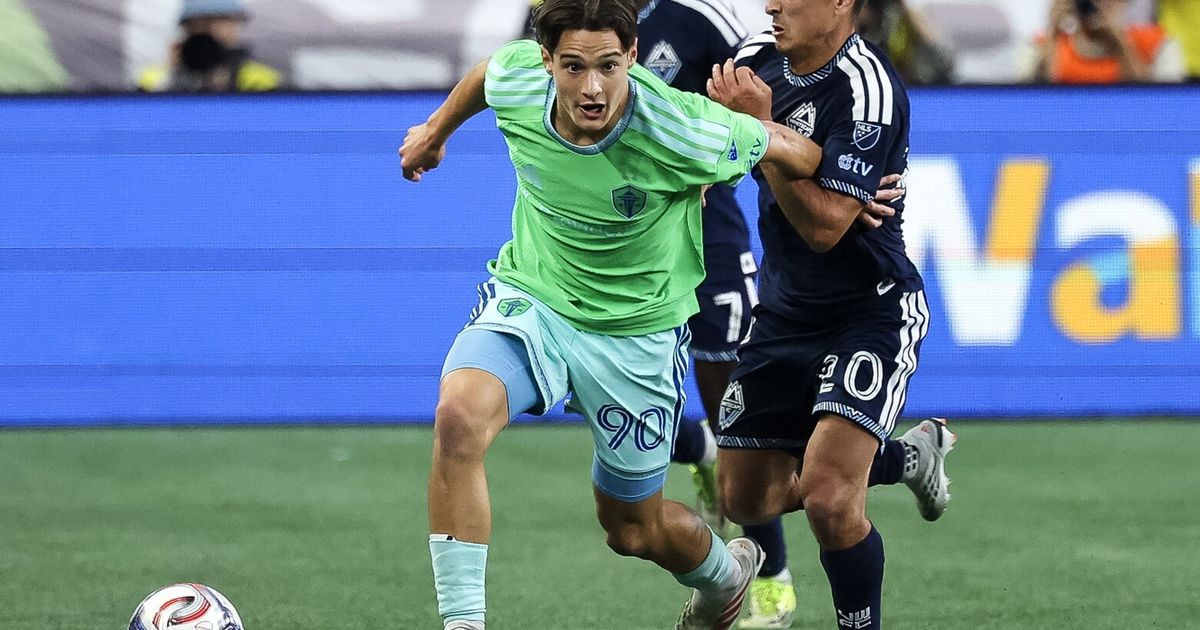
The Seattle Sounders take on the Vancouver Whitecaps in an electrifying match, with the two teams...

Ally Sentnor's 1st Angel City FC goal salvages draw with Washington ocregister.com

Watch the live action of Tijuana vs. Cruz Azul, all the latest news, analysis, and match scores...
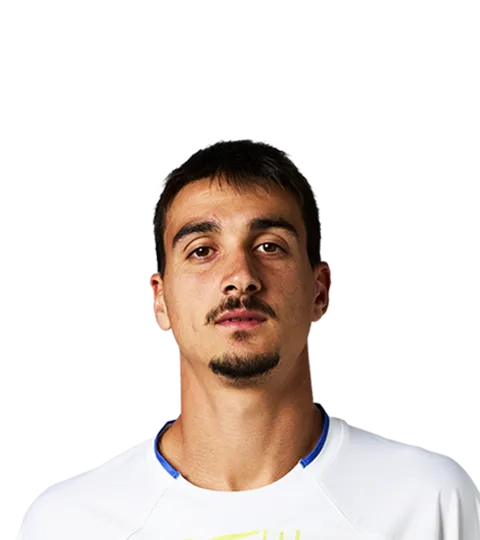
The highly anticipated match between Lorenzo Sonego and Frances Tiafoe is set to take place in the...
.jpg?w=1120&h=630)
Dallas Cowboys' Next Move: Exploring Adoree' Jackson's Potential Signing After Von Miller's...

Netizen tidak senang dengan komentar-komentar yang diberikan

BTS mungkin kembali mengikuti Grammy setelah rekanan mereka, Recording Academy, mengumumkan revisi...
BTS mungkin tidak akan mengubah keputusan untuk mengabaikan Grammy karena deadline pengiriman musik...
Update terbaru tentang keputusan BTS untuk tidak mengirimkan musik mereka untuk dijadikan nominee...
Pihak Recording Academy mengumumkan akan kembali meninju keputusan untuk memperkenalkan kategori...

Sangyeop Sangyeop mengumumkan rencananya untuk menikah dengan seorang non-celebrity, mengejutkan...