



Hawaiian Electric Provides Statewide Power Restoration Update
Hawaiian Electric has issued a comprehensive update on the status of power restoration across the...
This article is a column, with all content and opinions being the personal views of the writer and not representing the editorial stance.
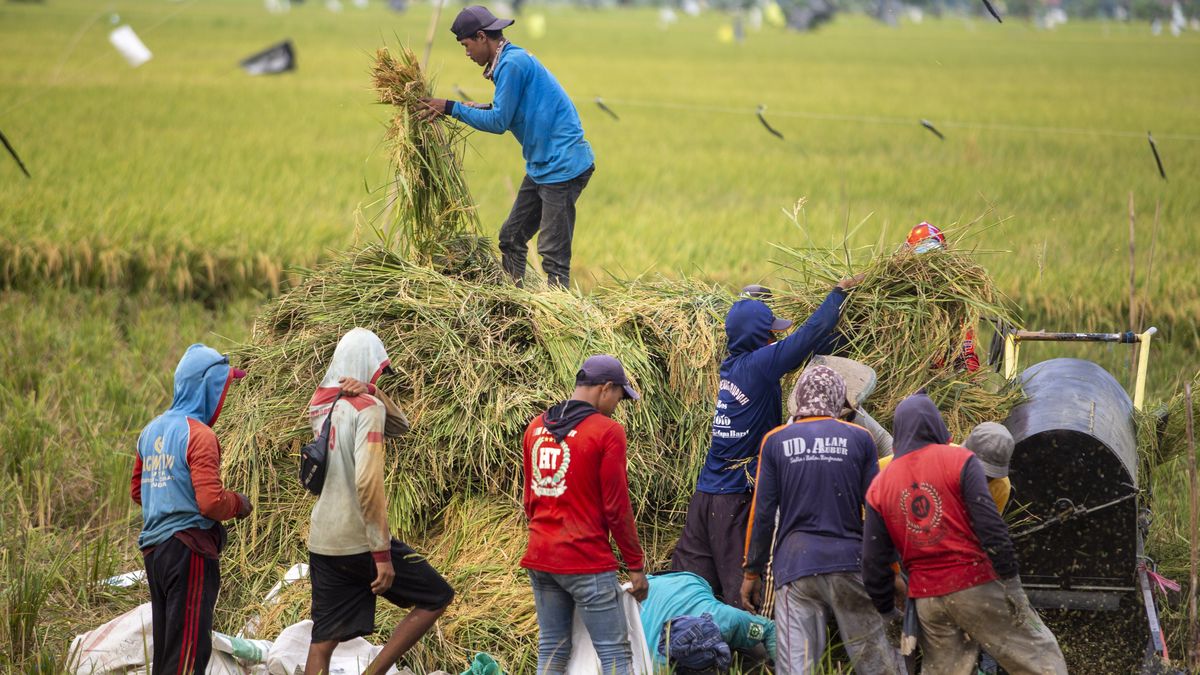
Ambitions of food self-sufficiency often become a hot commodity for politicians leading up to a change in power.
Under the national leadership this year, the optimism reached new heights following the success in eradicating rice imports throughout 2025, declared in Karawang.
The pangan protectionist policy was tightened by totally halting rice imports, both industrial and for consumption, followed by an increase in the national rice stock target by Bulog to four million tons.
However, rejoicing over self-sufficiency on paper without accounting for ecological vulnerabilities might lead to systemic recklessness.
Behind the din of nationalist rhetoric, the massive climate threat known as El Niño Godzilla is quietly moving through the Pacific, set to test the true foundation of Indonesia's food security.
Scientifically, El Niño Godzilla is not just a flashy term but an extreme interaction between the ocean and atmosphere in the tropical Pacific.
Characterized by a rise in sea surface temperature in the Nino 3.4 region exceeding the standard, this anomaly is projected to reach extreme deviations of 2.5°C to 4.0°C above normal.
This cycle is fueled by the peak solar activity in 2025, which historically amplifies droughts in the following year.
Throughout April to October 2026, peaking in August, the Walker circulation drastically shifts, moving the rain center to the central and eastern Pacific.
The impact for Indonesia will be even more destructive as it coincides with a positive 'Indian Ocean Dipole' phenomenon that cools sea surface temperatures around Java and Sumatra, further depressing national rainfall to historically low levels in a decade.
Under these conditions, Indonesia is hit at a time when its food security is structurally vulnerable.
The policy of zero rice imports in 2026, based on 2025's surplus of 4.5 million tons, now faces a major challenge.
The 'Healthy Food for All' program, which is running full tilt, requires massive amounts of animal proteins, thereby driving chicken demand to one million tons and eggs to 700,000 tons.
This forces the government to increase Bulog's national corn target to one million tons to stabilize livestock feed.
Unfortunately, this ambition for carbohydrate self-sufficiency is in stark contrast to a very high dependency on importing non-carbohydrate goods.
More than 70 percent of Indonesia's soybean needs are imported, with prices soaring due to a rupiah devaluation reaching a level of IDR 18,000 per USD in June 2026.
This currency weakness sparked inflation on imported fertilizers, livestock feed, and agricultural medicine. At the same time, the trade balance of industrial commodities still shows a large-scale import of basic materials such as industrial sugar reaching 3.12 million tons and industrial beef at 17,000 tons.
Physical transmission from El Niño Godzilla directly strikes production capacity at the land level. Data from the Central Bureau of Statistics through the Agricultural Area Sampling Framework shows a notable decline in rice and corn production from the middle of 2026.
The accumulation of dry pipilian corn harvested area from January to July 2026 slumped by 3.55 percent to 1.69 million hectares against the same period a year prior.
A result of this area reduction, corn production in the first half of 2026 contracted by 2.69 percent to 8.33 million tons.
This article is part of the Lestari KG Media initiative, accelerating the Sustainable Development Goals.
The Coming Storm: El Niño Godzilla and Indonesia's Food Security Woes Kompas.com
Hawaiian Electric has issued a comprehensive update on the status of power restoration across the...
Darren Pai from Hawaiian Electric shares a critical 5 p.m. update on the ongoing power outage...
Jadwal Lengkap Upacara HUT RI ke-81 di Istana Negara: Mengenal Kepribadian Bangsa yang Solid dan...
/data/photo/2026/08/12/6a7c3632d078b.jpg)
Pemerintah mengeluarkan kebijakan untuk memberikan fleksibilitas kerja pada perusahaan pada 18...

Hawaiian Electric Company is pushing towards a major 'green power' milestone, targeting nearly...

Baca siaran ulang preview episode minggu depan 'Amazing Saturday' yang menampilkan ALPHA DRIVE ONE,...

Netizen tidak senang dengan komentar-komentar yang diberikan

BTS mungkin kembali mengikuti Grammy setelah rekanan mereka, Recording Academy, mengumumkan revisi...
BTS mungkin tidak akan mengubah keputusan untuk mengabaikan Grammy karena deadline pengiriman musik...
Update terbaru tentang keputusan BTS untuk tidak mengirimkan musik mereka untuk dijadikan nominee...
Pihak Recording Academy mengumumkan akan kembali meninju keputusan untuk memperkenalkan kategori...

Sangyeop Sangyeop mengumumkan rencananya untuk menikah dengan seorang non-celebrity, mengejutkan...