




Dallas Cowboys' Next Move: Exploring Adoree' Jackson's Potential Signing After Von Miller's Impactful Contract
Dallas Cowboys' Next Move: Exploring Adoree' Jackson's Potential Signing After Von Miller's...
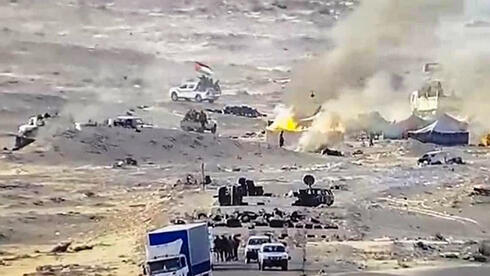
The Abraham Accords, a series of historic normalization agreements between Israel and several Arab states, has marked a significant shift in the regional dynamics of the Middle East. Signed in 2020, the agreements have paved the way for increased trade, tourism, and cultural exchange between the two erstwhile enemies.
For many, the Accords represented a long-overdue step towards peace in the region. 'The Abraham Accords are a testament to the power of diplomacy and the potential for Arab-Israeli cooperation,' said Yair Lapid, Israel's former Prime Minister. 'By normalizing relations, we are not only enhancing our bilateral ties but also contributing to regional stability and security.'
However, critics have argued that the Accords have not gone far enough in addressing the systemic issues driving conflict in the region. The ongoing Gaza conflict, fueled by long-standing Israeli settlement expansion and Palestinian refugee displacement, remains unresolved. The Accords have largely glossed over these contentious issues, instead focusing on joint economic and security initiatives.
Notably, the Accords have also been criticized for their narrow focus on state-level agreements, neglecting the needs and perspectives of local communities. 'The Accords have created a disconnect between the top-down policies of governments and the grassroots realities of people on the ground,' observed Dr. Mouhanad Khorais, a Palestinian analyst. 'Until we address the core issues of land, identity, and human rights, lasting peace will remain elusive.'
Despite these challenges, the Accords have opened doors to new opportunities for cooperation on security and counter-terrorism. Collaboration between Israeli and Gulf security forces has led to a significant reduction in cross-border attacks. 'The Accords have allowed us to share intelligence, coordinate operations, and tackle the common threat of terrorism more effectively,' noted a senior Israeli security official. 'This cooperation has saved lives and prevented potential attacks.'
Looking ahead, the implications of the Accords will be far-reaching. As cooperation between Israel and Arab states deepens, the region is likely to experience a gradual shift from a zero-sum game of conflict to a more pragmatic, transactional approach to diplomacy. This shift may also pave the way for greater regional engagement and normalization, potentially involving Turkey, Iran, and other key players.
The future of the Accords remains uncertain, with challenges posed by domestic opposition, Palestinian resistance, and ongoing tensions over Israeli settlement expansion. However, the agreements have set a crucial precedent, demonstrating that even in the most intractable conflicts, a window of opportunity for peace can open. By engaging constructively with the Accords, the international community can help build on this momentum, promoting greater stability and cooperation in one of the world's most volatile regions.
The Abraham Accords, a series of normalization agreements between Israel and several Arab states, have sparked a new wave of cooperation in the region.


Dallas Cowboys' Next Move: Exploring Adoree' Jackson's Potential Signing After Von Miller's...

The Importance of an Independent US Department of Justice: Understanding Todd Blanche's Remarks
Donald Trump orders Pentagon to scale back joint military exercises with South Korea, citing his...

Representative Nancy Mace embarks on a new journey, unveiling her full sleeves of long-concealed...
The decision to cut back on military drills with South Korea has significant implications for...

FITSNews reports on Nancy Mace's transition from outgoing congresswoman to online talk show host,...

Netizen tidak senang dengan komentar-komentar yang diberikan

BTS mungkin kembali mengikuti Grammy setelah rekanan mereka, Recording Academy, mengumumkan revisi...
BTS mungkin tidak akan mengubah keputusan untuk mengabaikan Grammy karena deadline pengiriman musik...
Update terbaru tentang keputusan BTS untuk tidak mengirimkan musik mereka untuk dijadikan nominee...
Pihak Recording Academy mengumumkan akan kembali meninju keputusan untuk memperkenalkan kategori...

Sangyeop Sangyeop mengumumkan rencananya untuk menikah dengan seorang non-celebrity, mengejutkan...