



US-South Korea Military Drills Scaled Back After Trump's Inauguration
The 2017 US-South Korea military drills were scaled back following a meeting between US President...
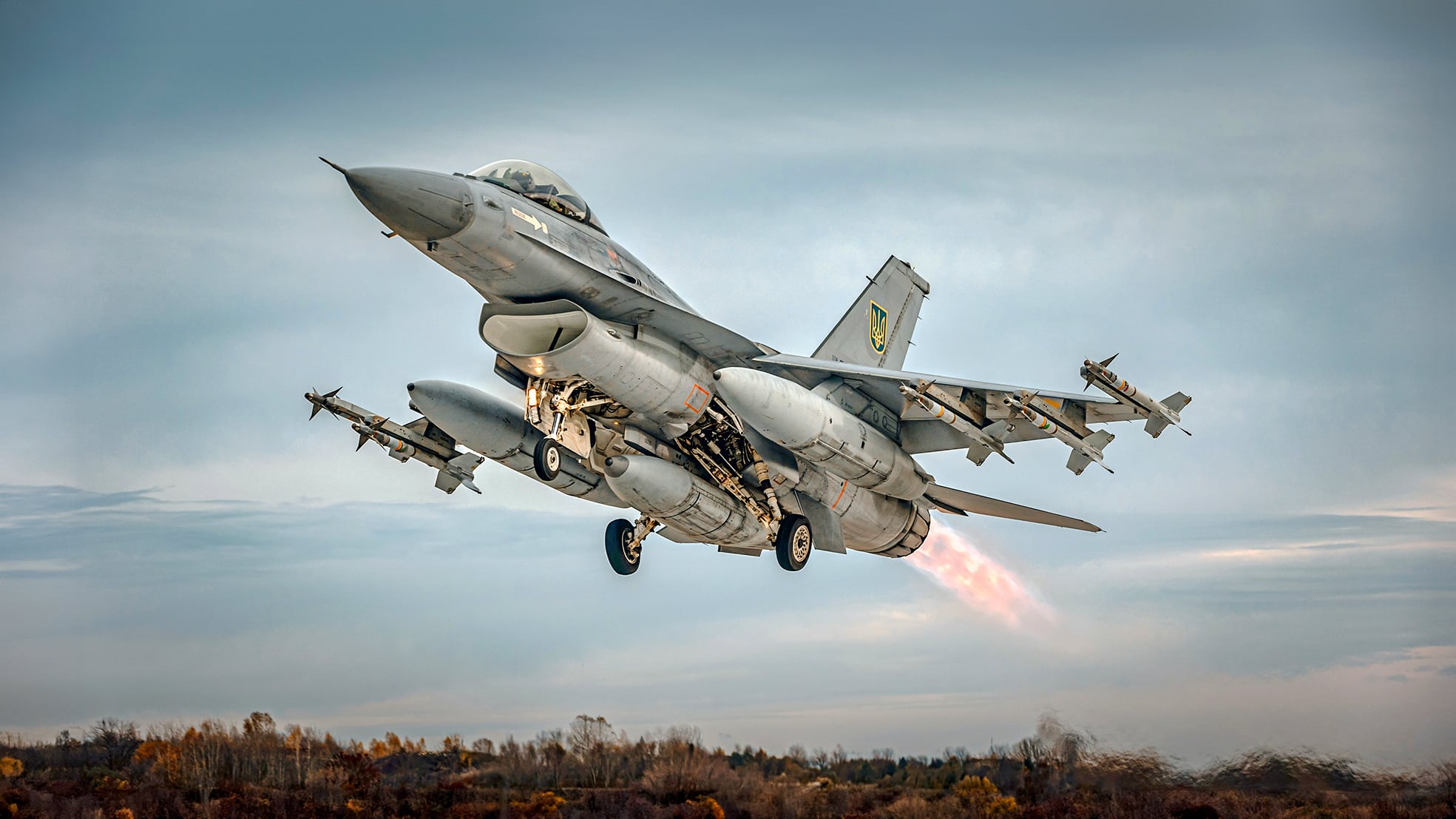
The Ukrainian Air Force (UkrAF) has achieved a significant milestone in its conflict with Russia, with a Ukrainian F-16 shooting down a Russian fighter jet for the first time, according to Gen. Dan Caine, Chairman of the U.S. Joint Chiefs of Staff. This development was disclosed during a hearing before the Senate Appropriations Committee, where Caine was testifying about a nearly $1 trillion supplemental budget request for FY2026 from the Department of War. The information is a crucial update on the ongoing conflict, highlighting the evolving capabilities of the Ukrainian military. The downing of the Russian jet is also a testament to the increasing effectiveness of the Ukrainian Air Force, which has been bolstered by international support. The incident marks a turning point in the conflict, showcasing the Ukrainian military's ability to counter Russian aggression.
While the model of the Russian jet was not specified by Caine, it is believed to be a Su-35S, based on a claim by the Ukrainian Air Force on July 8, 2026, which mentioned the downing of a Su-35S in the eastern sector. Additionally, a Kremlin-aligned Telegram channel, Fighter-Bomber, confirmed the engagement and the loss of the Su-35S, suggesting that the pilot was safely rescued. The channel, which has ties to Russian Aerospace Forces frontline units, has periodically reported Russian losses throughout the war and has also criticized Russian Ministry of Defense planning and procurement policies. The downing of the Su-35S is significant, given its role as a leading Russian Aerospace Forces asset conducting swing-role missions with SEAD/DEAD loadouts. The use of the Kh-31P Anti-Radiation Missile as its primary radar-killer weapon underscores the complexity of the conflict and the sophistication of the weaponry involved.
The circumstances surrounding the engagement are still somewhat unclear, with Fighter-Bomber claiming that the Ukrainian F-16s and a Patriot surface-to-air missile battery were involved, potentially baiting and destroying the Su-35S. However, no details of the engagement, including the weapon used, have been revealed by the Ukrainian Armed Forces, possibly for operational security reasons. The lack of information has led to speculation about the specifics of the incident, with some experts suggesting that the Ukrainian F-16s may have acted in concert with the Patriot battery to down the Su-35S. The use of a drone to verify the kill has been confirmed, with footage showing the debris of the Su-35S and the outline of the airframe clearly identifiable.
Gen. Dan Caine's testimony before the Senate Appropriations Committee provided insight into the evolving capabilities of the Ukrainian military, particularly in terms of air defense. Caine highlighted the incredible work of the Ukraine industrial base in scaling its capabilities, ranging from surface-to-air to air-to-air capabilities. The downing of the Russian fighter jet by a Ukrainian F-16 marks a significant achievement for the Ukrainian Air Force, demonstrating its ability to effectively utilize the F-16 in combat. The incident also underscores the importance of international support for the Ukrainian military, with the provision of advanced weaponry and training playing a crucial role in enhancing its capabilities.
The impact of this development on the conflict is multifaceted, with implications for both the Ukrainian and Russian militaries. The downing of the Su-35S highlights the vulnerabilities of Russian aircraft in the face of advanced air defense systems and capable pilots. For the Ukrainian military, the success demonstrates its growing prowess and ability to challenge Russian air superiority. The incident may also influence the trajectory of the conflict, potentially leading to increased tensions and escalation. As the situation continues to unfold, it is essential to consider the broader geopolitical implications and the potential for further conflict.
The role of international support in enhancing the capabilities of the Ukrainian military cannot be overstated. The provision of advanced weaponry, including the F-16, has been instrumental in bolstering the Ukrainian Air Force's ability to counter Russian aggression. The training and assistance provided by international partners have also played a crucial role in developing the skills and expertise of Ukrainian pilots. As the conflict continues, it is likely that international support will remain a critical factor in determining the outcome. The Ukrainian military's ability to effectively utilize advanced weaponry and leverage international support will be essential in shaping the future of the conflict.
In conclusion, the downing of a Russian fighter jet by a Ukrainian F-16 represents a significant milestone in the conflict, showcasing the evolving capabilities of the Ukrainian military and the importance of international support. As the situation continues to unfold, it is essential to consider the broader geopolitical implications and the potential for further conflict. The incident highlights the complexities of the conflict and the need for continued international engagement and support. With the Ukrainian military demonstrating its ability to challenge Russian air superiority, the future of the conflict is likely to be shaped by the ongoing interplay between the two militaries and the role of international partners.
The Ukrainian Air Force has marked a significant milestone in its conflict with Russia, with a Ukrainian F-16 shooting down a Russian fighter jet for the first time, according to Gen. Dan Caine, Chairman of the U.S. Joint Chiefs of Staff.
The 2017 US-South Korea military drills were scaled back following a meeting between US President...

The decision to reduce US joint military exercises in South Korea has significant implications for...
The United States is reportedly considering imposing new sanctions on a Brazilian judge, according...
A dramatic encounter at Busan Airport marked a pivotal moment in the waning support for Donald...

China is being urged to prepare its civilian ships for potential wartime use, a move that has...
The United States Navy is weighing a significant redesign of its warships to match the preferences...

Netizen tidak senang dengan komentar-komentar yang diberikan

BTS mungkin kembali mengikuti Grammy setelah rekanan mereka, Recording Academy, mengumumkan revisi...
BTS mungkin tidak akan mengubah keputusan untuk mengabaikan Grammy karena deadline pengiriman musik...
Update terbaru tentang keputusan BTS untuk tidak mengirimkan musik mereka untuk dijadikan nominee...
Pihak Recording Academy mengumumkan akan kembali meninju keputusan untuk memperkenalkan kategori...

Sangyeop Sangyeop mengumumkan rencananya untuk menikah dengan seorang non-celebrity, mengejutkan...