


The Independence of the US Department of Justice: Todd Blanche's Uncertain Pledge
The Importance of an Independent US Department of Justice: Understanding Todd Blanche's Remarks
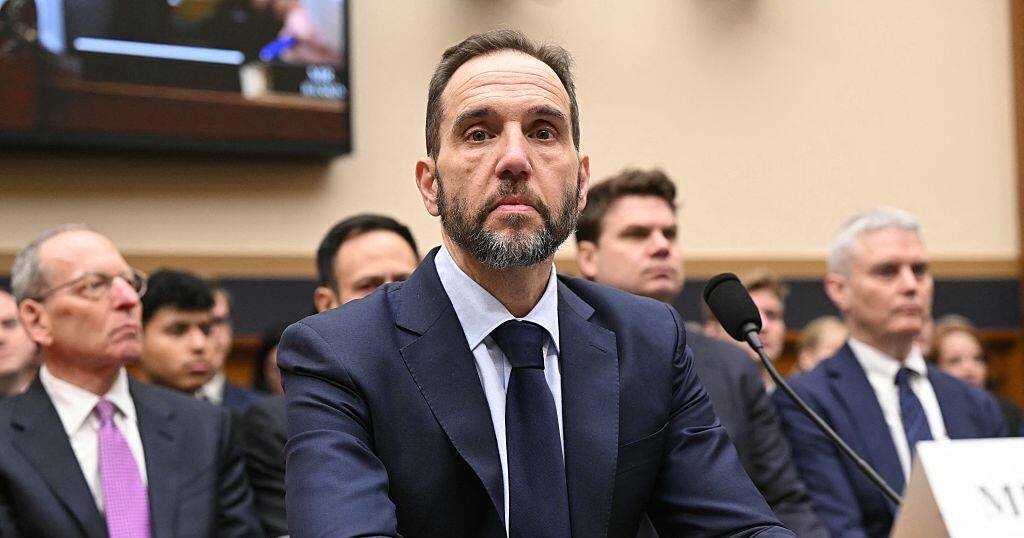
On July 22, 2026, the House Judiciary Committee, led by Republican Chair Jim Jordan of Ohio, referred to the Department of Justice (DOJ) the matter of former special counsel Jack Smith, who brought charges against President Trump, for possible criminal charges. The decision to refer Smith comes after allegations that he lied to Congress, specifically regarding his team's access to phone records of Republican lawmakers during an investigation into Trump's actions after the 2020 election.
The controversy centers around Smith's testimony last year, in which he stated that his team did not receive contents of any phone calls or text messages from the records they sought. However, recent revelations, including a letter from the Justice Department to lawmakers, indicate that Smith's team actually obtained text messages between White House staffers and dozens of members of Congress, as part of a separate subpoena to the National Archives and Records Administration. This discrepancy has led to accusations that Smith made 'materially false statements' and failed to disclose the subpoena to the National Archives, which is a requirement for any investigation.
According to Rep. Jordan, 'all individuals have an obligation to comply with a duly authorized congressional inquiry.' He further emphasized that Smith, as a former public servant, 'is no different' and that his testimony included intentionally false statements designed to obstruct the committee's oversight. The referral to the DOJ is now in the hands of Acting Attorney General Todd Blanche, who will decide whether to pursue criminal charges.
A Justice Department spokesperson confirmed that it has received the referral letter and will investigate all evidence of criminal conduct. Mr. Trump has called for Smith's prosecution in the past, and this latest development has drawn strong reactions from both sides. Smith's lawyers have vehemently denied the allegations, stating that their client's answers to the committee's questions were 'unimpeachably truthful' and that he was asked specifically about the subpoena for GOP lawmakers' tolling records, not the request for records from the National Archives.
Rep. Jamie Raskin of Maryland, the top Democrat on the House Judiciary Committee, has called the criminal referral 'baseless and vindictive,' arguing that the case 'will get laughed out of court' if it's heard by a judge. Raskin believes that the Republicans are trying to 'weaponize' the justice system against a non-partisan public servant who faithfully followed the facts and the law. This move by the Republicans is seen as a continuation of their long-standing efforts to undermine the DOJ and the legitimacy of any investigations into Trump's actions.
The case against Smith dates back to his appointment as special counsel in late 2022 by then-Attorney General Merrick Garland. Smith led two major probes into Trump's actions: one focused on Trump's attempts to stay in office despite his 2020 election loss and another examining his handling of sensitive government documents taken to his Mar-a-Lago club after leaving the White House. Smith brought charges in both cases, making him the first-ever federal prosecutor to do so against a former president.
However, both cases against Trump ended without charges in 2024. A judge tossed out the indictment on classified documents over concerns about Smith's appointment, and the Supreme Court threw out parts of the 2020 election indictment due to Trump's claim of official immunity for acts performed in office. Smith has maintained that he followed the facts and the law in his investigation and prosecution of Trump.
As the controversy surges, it is essential to consider the implications of this situation on the country's politics and the integrity of public office. This case highlights the complex relationships between investigation, prosecution, and the judiciary, and the challenges of ensuring the rule of law in the face of partisanship. Regardless of the outcome, this case underscores the importance of accountability and transparency in government.
In a broader context, this case reflects the ongoing struggle for power and influence in American politics, with each side accusing the other of 'weaponizing' the justice system to suit their interests. This narrative has played out in numerous high-profile cases and continues to polarize the nation.
Looking ahead, it is crucial to separate facts from politics and to examine the underlying issues driving this case. By focusing on the core concerns of accountability and integrity, observers can engage with the complex questions underlying this controversy and contribute to a more nuanced national discourse.
This is not the first time the House Judiciary Committee has taken action against a public official. In 2023, the committee voted to hold Attorney General Merrick Garland in contempt for his refusal to cooperate with their investigations into the Biden administration. The move was widely seen as a partisan stunt designed to embarrass the administration rather than a genuine pursuit of truth.
The current situation presents an opportunity for the Judiciary Committee to demonstrate its independence and commitment to oversight. By conducting a thorough investigation and considering the facts of the case, they can show that their goal is genuinely to uphold the law, rather than to score partisan points.
This referral, regardless of the outcome, will continue to fuel the ongoing conversation about the role of prosecutors, law enforcement, and the courts in American politics. It has the potential to lead to a more in-depth exploration of these issues, potentially paving the way for a deeper understanding of the critical balance between justice, politics, and the rule of law.
Apart from the specifics of this case, it also speaks to a broader concern about the politicization of investigations and prosecutions. As the nation moves forward, it is imperative that all those involved in the justice system remain committed to upholding the law, without succumbing to the pressures of partisanship.
Ultimately, the outcome of this referral and the impact on the broader debate will depend on the careful consideration of facts and evidence by the Department of Justice, the Judiciary Committee, and the wider public.
A Justice Department spokesperson said they would carefully investigate the allegations and follow due process. 'We will investigate all evidence of criminal conduct, and any referral by the House Judiciary Committee will be considered as part of our review,' the spokesperson stated.
House committee urges DOJ to charge former Trump prosecutor Jack Smith in a case that has sparked intense debate about integrity and accountability in public office.



The Importance of an Independent US Department of Justice: Understanding Todd Blanche's Remarks
Donald Trump orders Pentagon to scale back joint military exercises with South Korea, citing his...
Representative Nancy Mace embarks on a new journey, unveiling her full sleeves of long-concealed...
The decision to cut back on military drills with South Korea has significant implications for...

FITSNews reports on Nancy Mace's transition from outgoing congresswoman to online talk show host,...
President Trump's recent order for the Pentagon to curtail military exercises with South Korea has...

Netizen tidak senang dengan komentar-komentar yang diberikan

BTS mungkin kembali mengikuti Grammy setelah rekanan mereka, Recording Academy, mengumumkan revisi...
BTS mungkin tidak akan mengubah keputusan untuk mengabaikan Grammy karena deadline pengiriman musik...
Update terbaru tentang keputusan BTS untuk tidak mengirimkan musik mereka untuk dijadikan nominee...
Pihak Recording Academy mengumumkan akan kembali meninju keputusan untuk memperkenalkan kategori...

Sangyeop Sangyeop mengumumkan rencananya untuk menikah dengan seorang non-celebrity, mengejutkan...